



MALAYSIA: Prime Minister Anwar Ibrahim is actively pushing for a bill to split the roles of the attorney general (AG) and public prosecutor (PP), but experts and some MPs are now saying they are sceptical he will succeed.
Critics are also adding their voices to the debate, saying any rush to get the bill voted on in the current Parliamentary session may not be good for the country.
The Bill to separate the offices of the Attorney-General – the government’s top lawyer appointed by the prime minister – and the public prosecutor was tabled in response to calls from a broad cross-section of Malaysian society to ensure decisions on criminal charges are independent of political pressures.
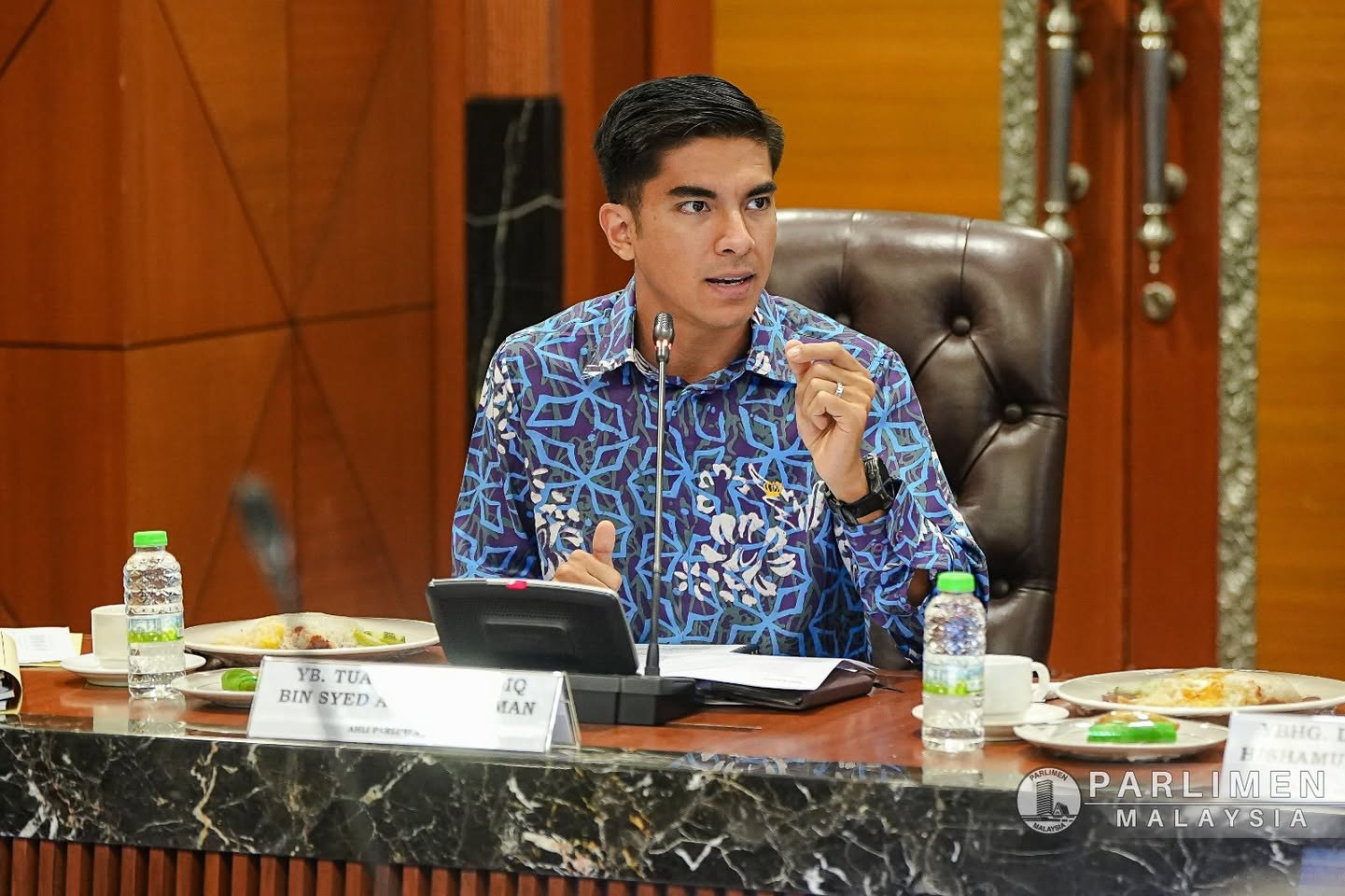
Muar MP Syed Saddiq Abdul Rahman, formerly the leader of the MUDA party, said if a “middle ground” for two-thirds of lawmakers is not found soon, then the bill may not materialise in the near future. He also said this proposed reform is “not going to happen for a very long time” if it fails to materialise this time.
“Because it will send a chilling signal to any other future prime minister or minister of law that this is such a divisive issue which is not worth it to even pursue, because you need two-thirds support, which is already very high.”
Syed Saddiq is a member of a 12-MP parliamentary special select committee (PSSC) that is studying how to improve the government’s Bill for the AG-PP split.
The newly proposed law requires amending the Federal Constitution, which means it needs the support of two-thirds of the MPs in the Parliament to pass.
“Based on the last meeting, now that the battle lines are clearly drawn, if the battle lines are not resolved quickly, it’s not going to happen,” Syed Saddiq said in a forum yesterday.
On March 3, Anwar failed to get both his signature reforms across after a bid to remove prosecutorial powers from Malaysia’s attorney-general was sent to a parliamentary panel for improvements.
This followed a shock setback just on March 4, when a constitutional amendment to cap the term of the prime minister to 10 years was not passed in Parliament. It was the first defeat in Parliament for the Pakatan Harapan (PH)-led government headed by Anwar.
Anwar also faced intense pressure from his own party, PKR, on the bill. A group of 10 PKR MPs led by former economy minister Rafizi Ramli had on Feb 24 claimed the process of appointing the public prosecutor could still be influenced by the executive.
They want Parliament to approve the choice of prosecutor, instead of the Judicial and Legal Services Commission recommending someone directly to the king. The concern is that several commissioners are already government appointees, chosen by the prime minister or with his advice to the king.
Meanwhile, a former Deputy Minister, Zaid Ibrahim, also voiced his concerns with the ‘rush’ to push the bill through parliament.
“What’s so difficult about the separation of PP and the AG? It’s only difficult if you do not want an independent Public Prosecutor. That independence can’t be 50% or 60%. Either he is independent, or he is not,” he said on X and Facebook.
He criticised the de facto Law Minister, Azalina Othman, asking why she couldn’t draft a bill to establish the separation of powers.
“After all the study trips overseas, are you telling me Azalina can’t draft a bill to establish an independent Public Prosecutor’s Office properly? As I said before, it’s not important to have a separate person holding the office of the AG and the Public Prosecutor.”
The points raised by Zaid are as follows:
-
The Prosecutor’s Office is set up by law and operates independently in daily work, though the Attorney General (AG) oversees it and is accountable for its decisions.
-
This accountability is what gives the Prosecutor’s Office its independence.
-
Azalina proposes separating the roles of AG and Public Prosecutor, which requires amending Article 145 of the Constitution.
-
Doing so would mean breaking up the Attorney General’s Chambers (AGC), since prosecutors currently rely on Deputy Public Prosecutors (DPPs) within the AGC.
-
Such restructuring would affect thousands of lawyers in the AGC, explaining why there is resistance from the AG and AGC.
He also urged Syed Saddiq not to accept a 50% solution from the current deadlock, saying: “The mess is created by a lack of clarity in how to separate the functions of the PP and the AG. There is no need to separate the person. Just focus on the functions, but the Office of Crown Prosecution has to be established by statute so that it’s clear the roles the Prosecutors will play in the discharge of their duties.”