



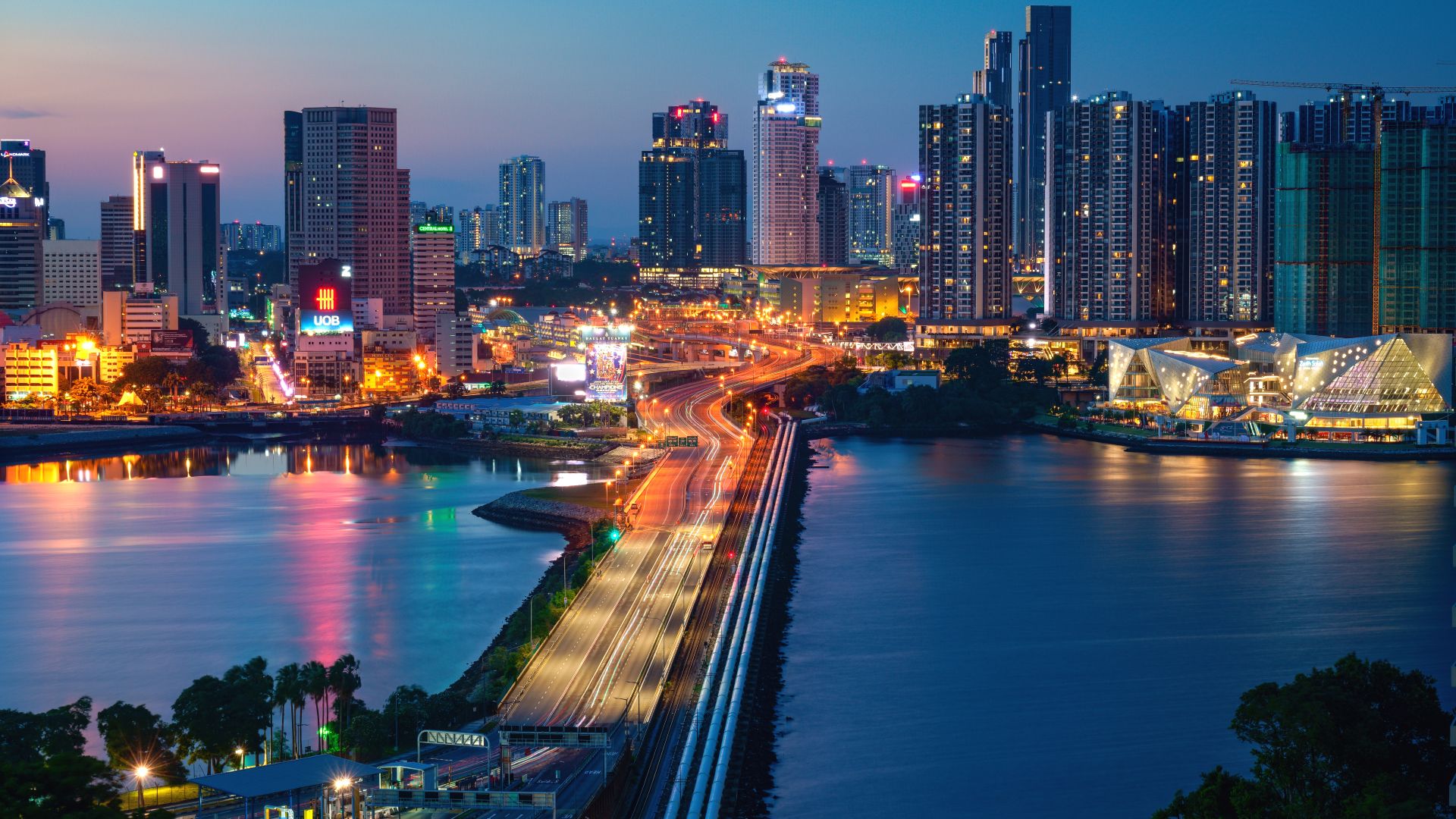
SINGAPORE/JOHOR BAHRU: A renewed enforcement of a long-standing ban on walking across the Johor Causeway by Malaysian authorities has sparked confusion among daily commuters, particularly as Singapore maintains a different stance on pedestrian access.
According to Malay Mail, Malaysia has reaffirmed that pedestrians are strictly prohibited from walking along the 1.05-km bridge linking Johor Bahru to Singapore, citing safety risks and regulatory concerns.
They added that the Malaysian Highway Authority (LLM) and PLUS Malaysia Berhad reiterated that “users are not allowed to walk along the Johor Causeway, whether from the Malaysian border to Singapore or from the Singapore border to Malaysia”.
They added that walking on the Causeway is not only dangerous but also constitutes a violation of traffic regulations, with offenders facing fines ranging from RM300 (S$96) to RM2,000.
A longstanding ban, now more visible
While the restriction is not new, having been in place since the opening of the Bangunan Sultan Iskandar (BSI) Customs, Immigration and Quarantine Complex in 2008, its recent enforcement has become more visible with the installation of new “no walking” signage.
The sign, placed near the end of a pavement leading from Woodlands Checkpoint, serves as a clear warning that pedestrians entering Malaysian territory are not permitted to proceed on foot. Beyond this point, individuals would have to walk along narrow road shoulders, which authorities say pose significant safety risks.
Singapore’s position
On the Singapore side, however, the approach appears less rigid. The Immigration and Checkpoints Authority (ICA) stated that there have been no changes to its policy regarding pedestrian movement.
“There are currently no changes to pedestrians’ access on foot on the Singapore side of the Causeway,” a spokesperson said as quoted by Malay Mail.
This effectively means that while Singapore does not actively facilitate walking across the bridge, it also does not explicitly prohibit it.
Why this matters for Singapore
For Singapore, the issue goes beyond a simple policy difference; it highlights the pressures of managing one of the busiest land crossings in the world. Every day, hundreds of thousands of workers rely on smooth movement across the Causeway. In many ways, these workers help keep Singapore’s economy running, particularly in sectors like construction, services and manufacturing. When congestion builds up, delays can ripple into workplaces, affecting productivity and daily operations.
The differing rules also create uncertainty for commuters. A journey that may seem permissible on one side of the border can quickly turn into a violation on the other, putting individuals at risk of fines or safety hazards.
More than that, the situation also shows the importance of coordination between the two countries. With major infrastructure projects like the Rapid Transit System (RTS) Link still in development, gaps in current transport capacity remain a real concern.
For now, the walking ban and Singapore’s more flexible stance reflect a mismatch between policy and on-the-ground realities, one that continues to impact thousands who depend on the crossing daily.
A growing cross-border dilemma
The policy difference highlights a broader challenge in managing one of the world’s busiest land borders. While safety remains a key concern for Malaysian authorities, the practical realities of daily commuting continue to drive demand for more flexible and accessible options.
Until a clearer, coordinated approach is established or infrastructure improvements are made, commuters navigating the Causeway may continue to face uncertainty over what is allowed and what is not, depending on which side they are on.
Read also: Causeway vs Second Link: What first-time travellers need to know