



MALAYSIA: Reports that beggars are earning more than RM700 (S$200) a day in parts of Klang are drawing attention from wet market traders and the public, especially as signs of organised activity begin to surface.
Several beggars, many believed to be from China, have been seen operating in areas such as Taman Eng Ann, Kampung Baru Pandamaran, and Bandar Bukit Tinggi. Their presence has grown more visible since the Chinese New Year.
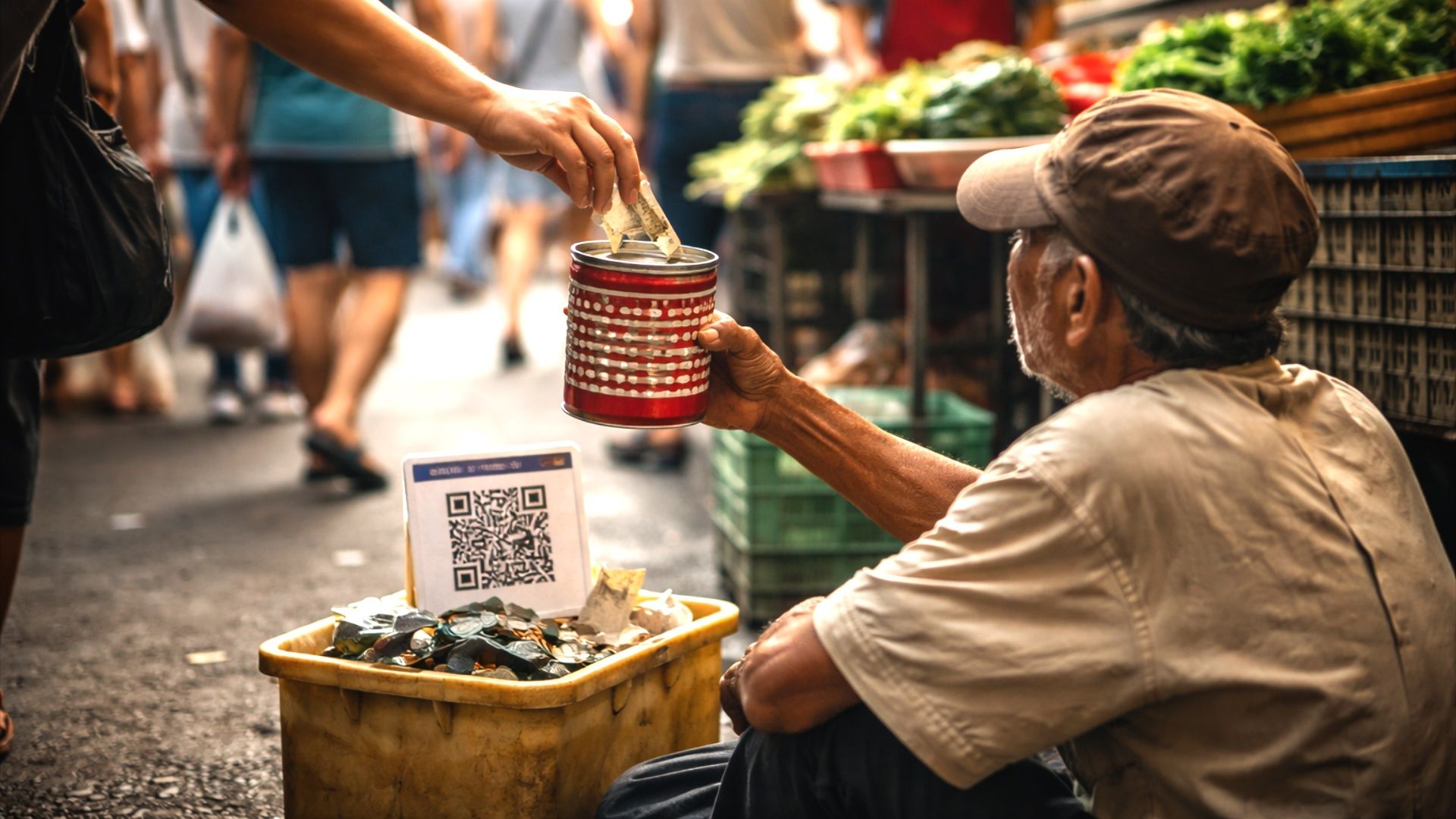
Many of these beggars rely on visible physical disabilities to appeal for sympathy. Some sit or lie on the ground with donation tins, while others perform songs using microphones and portable speakers. A few have gone a step further, placing QR codes in front of them to collect digital payments, according to The Star, citing a report by China Press.
Traders report beggar disruptions and aggressive behaviour
Wet market traders say the situation is starting to affect their business. One trader, Xu Jian He, described how beggars approach customers directly while they are browsing, holding out donation cans in close proximity. He said this behaviour feels intrusive and discourages people from staying at the stall.
Another trader, known only as Lin, suspects a more organised setup behind the scenes. She observed that groups of beggars are transported to market areas together and picked up after closing hours. This pattern, she said, suggests coordination rather than individual effort.
Cashless begging: QR code donations are also accepted
The reported daily earnings of over RM700, or about S$200, stand out, especially when compared with what many small traders make in the same markets.
That contrast is what makes this situation socially interesting, if not concerning. It changes the perception of street begging from a survival act to something that may be structured, and in some cases, profitable. The use of digital tools like QR codes also shows how even informal activities are adapting to cashless habits in Malaysia.
For Singaporeans, this also echoes past concerns about organised begging rings in the region. It raises familiar questions about enforcement, cross-border movement, and how public generosity can be exploited when systems are not tightly monitored.
Balancing welfare support and enforcement
Not every person begging, however, is part of a larger syndicate network. Some may still be acting on genuine need, but when patterns of transport, grouping, and consistent high earnings are profited from, it becomes harder to treat each case as an isolated one.
Authorities may need to look at both welfare support and enforcement together. Cracking down without support risks hurting those in real need. Ignoring the organised element, on the other hand, allows potential abuse to grow.
Donations via verified channels or local charities remain the safer option
In addition, public kindness shouldn’t be discouraged. Donations should be directed with care instead. Giving through verified channels or local charities remains the safer option. It helps ensure that support reaches those who truly need it, without feeding systems that may take advantage of it.