



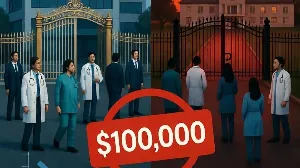
A decline in H-1B visa applications has led to increased selection rates for the programme, benefiting high-skilled foreign workers in the US.
US companies have reported a significant increase in selection rates in the current H-1B visa lottery, a considerable change from previous years. Early data shared by immigration firms with Bloomberg Law indicates that selection rates in some cases have risen above 50%, a stark contrast to the roughly one-in-three odds experienced in past lotteries.
This surge in success rates is primarily attributed to a sharp decrease in the number of applicants, which immigration lawyers believe has been influenced by the introduction of a $100,000 fee on foreign hires by the Trump administration. This financial barrier has discouraged many universities, hospitals, and technology companies from sponsoring employees from abroad, thus significantly reducing the pool of applicants.
Law firms have noted that a considerable number of employers have either reduced their international hiring or opted out of the lottery altogether. Instead, many companies are focusing on candidates who are already in the US, resulting in higher success rates for those who do apply for H-1B visas.
Estimates suggest that total registrations for the 85,000 available visas have dropped to between 195,000 and 235,000 this year, representing a decline of up to 43% compared to the previous year. This marks the lowest number of applications since the online lottery system was implemented in 2020.
A revised selection model introduced during the Trump administration now prioritises higher-paid and more senior roles, allowing certain applicants to submit multiple entries based on wage tiers. However, experts have indicated that the reduction in the applicant pool has had a more significant impact than the changes to the selection criteria itself.
In some cases, applicants holding advanced degrees in high-wage categories are experiencing selection rates exceeding 70%, suggesting a trend where the system increasingly favours senior and highly skilled professionals. Immigration firms have conveyed that the improved chances of winning this year result largely from the smaller pool of applicants created by the $100,000 fee.
Following the introduction of the fee, many universities and hospitals halted their international recruiting efforts, unable to afford the associated costs. Additionally, many technology firms, which previously accounted for about 40% of new H-1B employees, have also reduced their foreign hiring amid significant investments in artificial intelligence.
While there remains uncertainty regarding potential changes to the rules or court interventions that might affect the visa fee, the rise in selection rates represents an opportunity for highly skilled Indian workers, as the new system appears to favour those with higher salaries and considerable experience. In contrast, American workers may find that entry-level job opportunities are more likely to be filled by domestic candidates.
Even those who successfully navigate the selection process face heightened scrutiny. Updated forms from the United States Citizenship and Immigration Services (USCIS) now require detailed justifications for job roles and wages. Experts caution that the overall procedure is becoming more complicated, posing higher risks and challenges for both employers and workers involved in the H-1B visa system.
The selection rates have seen a noticeable rise primarily due to the sharp decrease in applicants, largely due to the recent financial barriers introduced. This year marks a significant decline in registrations, potentially reaching the lowest point since the launch of the online lottery in 2020.