



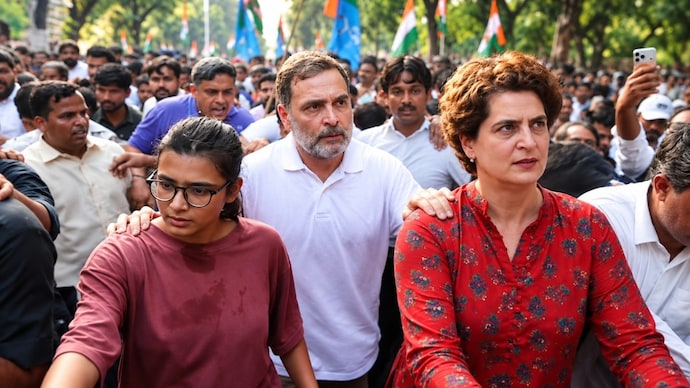
The BJP critiques AISA leader Neha Bora’s comments on regime change, highlighting tensions with the opposition and the implications for democracy.
The Bharatiya Janata Party (BJP) has recently reacted strongly to comments made by Neha Bora, a leader of the All India Students Association (AISA). In a video, which has circulated widely, Bora suggests that movements for rights in Bangladesh have set an example for similar efforts in India, referring specifically to democratic and voter rights. She stated, ‘We know that the Gen Z movement that we are seeing in India first started in Bangladesh. Congratulations to you for showing us the way.’ The BJP spokesperson, Pradeep Bhandari, has called Bora a ‘poster girl’ of opposition leader Rahul Gandhi and characterised her statements as an open admission of an intent to change the regime in India. His post on social media platform X expresses concern, asserting, ‘Rahul Gandhi and Co. are a threat to Indian democracy.’ The remarks have escalated political tensions, particularly in the context of ongoing discussions surrounding governance and political accountability. Bora’s comments came during a conference organised by the Socialist Students Front in Bangladesh, highlighting young people’s movements for democratic rights. Furthermore, Prashant Bhushan, a prominent lawyer and political activist, echoed sentiments in a press conference stating, ‘We all want a regime change.’ This claim was met with resistance from the BJP, which argues that the opposition is not focused on student and voter rights; instead, they accuse their rivals of attempting to ‘stage a coup’. Sambit Patra, a senior BJP spokesperson, reinforced this stance, reminding the public that the nation belongs to its population, approximately 1.4 billion strong, and not to any single individual or family. Bhushan has countered the BJP’s claims, referencing the party’s own history of protests advocating for regime change, stating, ‘BJP protested multiple times for regime change and then they say that there is a conspiracy for regime change.’ This ongoing exchange illustrates the complex political landscape in India, where discussions about democracy and governance remain central themes of public discourse.
