





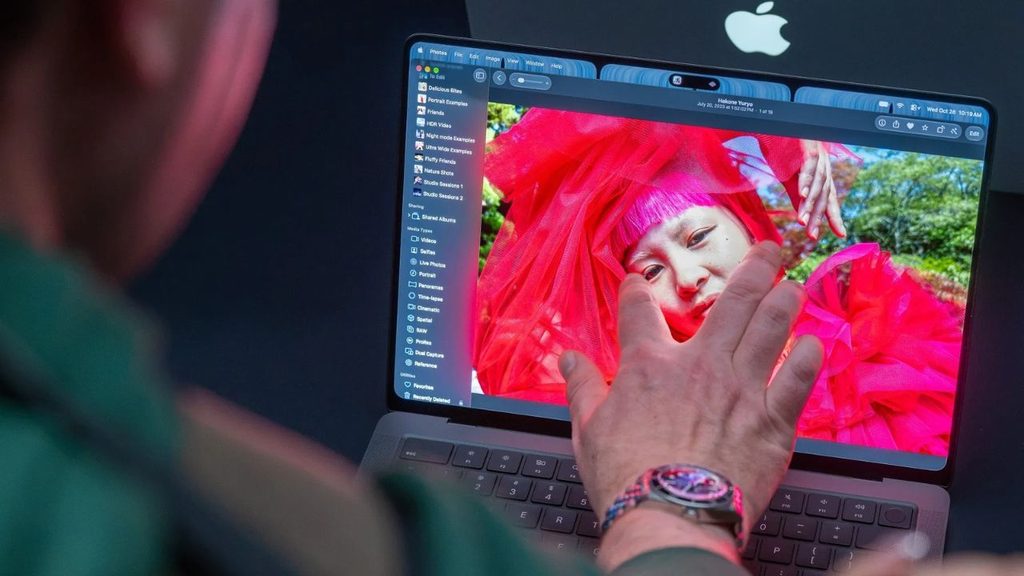
Apple’s latest MacBook Pro features a touchscreen and OLED display, but experts say the new feature feels underwhelming and unremarkable.
Apple has debuted its long-anticipated MacBook Pro featuring a touchscreen and the new PROLED XDR Display, a move that has garnered mixed responses from users and experts alike. While the laptop boasts a thinner and lighter design, as well as a display offering deeper blacks and brighter colours, many are questioning the actual utility of the touchscreen functionality.
Introduced by Apple, this latest model comes equipped with capabilities that support a wide range of colours and is being marketed as a ‘reference-caliber display.’ This description reflects Apple’s branding but may not align with expectations set by previous promises about the advantages of touchscreen technology.
Previously, Apple executives publicly expressed reservations about incorporating touchscreens into their laptops, deeming such an addition potentially ergonomically unsound. However, developments surrounding user interaction with computers have led to a scenario where both touchscreen and traditional keyboard inputs coexist. Users now have the option to directly touch the screen, with some new functions available within the operating system.
Despite this, the tactile experience appears to be somewhat standard for a laptop and not a transformative innovation. Some users have reported that interface elements do respond more substantially to touch inputs, but others feel that these enhancements resemble features already present in trackpad usage.
Over a decade ago, touchscreen laptops were anticipated to revolutionise the market when Microsoft launched Windows 8, aiming for a more touch-friendly interface. However, the reality did not meet expectations; the touchscreen became a staple rather than a game-changer in laptop design, largely due to the mixed reaction to convertible laptops that featured touch capabilities.
Current users of the new MacBook Pro have observed that, despite its touchscreen functionality, most tasks are still accomplished through conventional keyboard and trackpad methods with the touchscreen serving as an additional option rather than a necessity. Moreover, Apple has not yet included support for its Pencil accessory, leaving some potential users desiring more versatility in their input options.
The new laptop also features enhanced elements such as the Dynamic Island—a redesign of the previous notch—and the revival of the illuminated Apple logo which has received a positive response from consumers. This suggests that while the touchscreen is present, other facets of the device may be of equal or greater appeal to users.
As the MacBook Pro enters a mature stage in its development, analysts suggest that this could pave the way for similar advancements in more budget-friendly models within Apple’s laptop line-up. While this initial offering does not significantly alter user experience or expectations regarding touch capability, it sets a foundation for future iterations that may further integrate touchscreen functionalities in ways that enhance productivity and interaction.
In conclusion, while the new MacBook Pro is a commendable addition to the Apple ecosystem with its high-quality display and updated features, the touchscreen functionality appears to have been introduced without a compelling narrative or clear enhancement to user experience. As a result, many experts recommend a wait-and-see approach regarding the potential applications of touch technology in future devices.
The combination of traditional keyboard and trackpad inputs alongside a touchscreen may serve a wide range of users, yet whether this balances well against how users traditionally approach laptop use remains to be seen.