



US President Donald Trump has announced an agreement with Venezuela that he called the “biggest oil deal in world history”.
The Trump administration says the agreement will double US oil reserves and lower fuel prices for all Americans. But questions remain about whether and when that might happen.
Trump’s approval ratings are currently at record lows. This deal is partly an attempt to address voters’ concerns about affordability ahead of the US midterm elections in November.
Yet for both the United States and Venezuela, a series of challenges pose significant barriers to the long-term success of the deal.
What do we know about the deal?
On Monday, the White House provided further details about how the deal will operate.
Venezuela’s interim president, Delcy Rodríguez, has granted 100-year concessions to develop 17 oil fields to a joint venture between the US government and North American Blue Energy Partners, a private oil exploration and production company.
Combined, these fields have estimated reserves of 65 billion barrels of oil.
To put that in perspective, the total amount of extracted crude oil the US currently has sitting in its stocks sits at 718.6 million barrels – just 1% of the indicated quantity of Venezuelan oil.
The US-backed North American Blue Energy Partners is Venezuela’s second-largest private oil producer. It’s run by Alejandro Betancourt López, a Venezuelan businessman who is reported to have ties with Rodríguez.
Under the agreement, the Pentagon’s Office of Strategic Capital (originally set up under the Biden administration) will take a 35% equity stake in North American Blue Energy Partners.
The US government is guaranteed 20% of oil offtake at cost, as well as the right of first refusal to purchase the remaining 80%.
The agreement requires that a majority of North American Blue Energy Partners’ board members be US citizens. It also gives the US government veto power over the board of directors.
Pain of higher gasoline prices
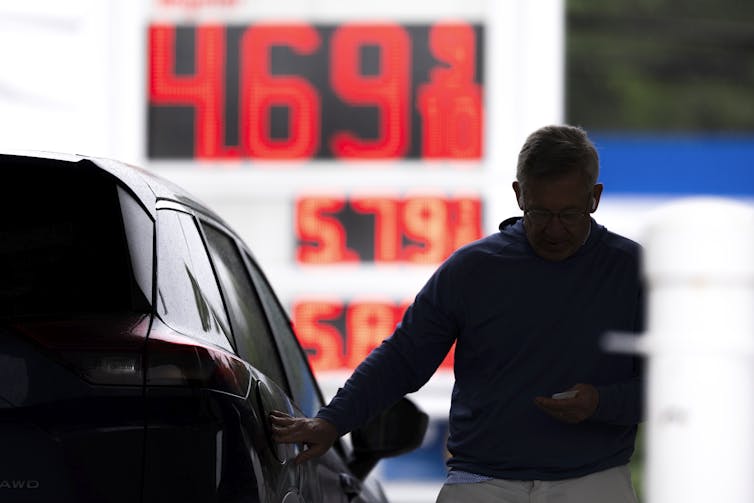
As the Iran war continues, the US government faces domestic pressure over high energy prices. Crude oil prices are up more than 20% since March, due to the effective shutdown of the Strait of Hormuz, a vital shipping choke point.
The average US citizen has felt this impact. Gasoline (petrol) prices have jumped 37% since the start of the conflict, and food prices are 3% higher than they were last May and are continuing to rise each month.
Jim Lo Scalzo/EPA
Venezuela’s energy sector needs investment
Venezuela is home to some of the world’s largest proven oil reserves, but currently makes up only 1% of global production.
This is a result of years of underinvestment, ageing infrastructure and the impact of US sanctions dating back to 2005.
This deal has the potential to get Venezuela the capital and investment needed to scale up energy production and exports.
Rodríguez has announced her support, pointing to the potential for economic revenue and the modernisation of energy infrastructure.
Why change will take years
It’s unlikely the US market will see any major shift in energy prices in the short term. It will take years and significant investment to build out the infrastructure in Venezuela needed to scale oil production.
Chevron was the only US company to stay in Venezuela following the country’s nationalisation of oil resources in 2007. The company is reportedly in talks to expand its operations in Venezuela.
Venezuela’s existing oil fields can increase output more quickly, but will still require an estimated US$10 billion to $20 billion to repair and modernise.
Rystad Energy, an independent energy research company, estimates it could take until the mid-2030s to even reach full production for existing oil fields.
For the development of new oil fields, one estimate says it could take upwards of a decade and at least US$100 billion in investment to bring new supply online.
A risky deal?
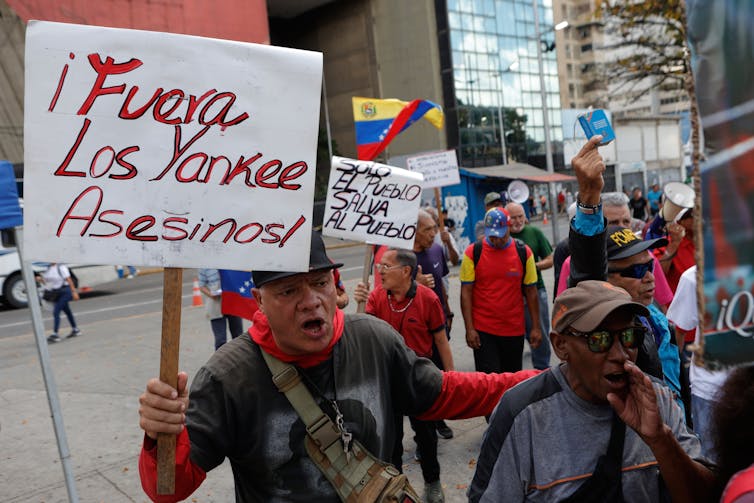
This deal comes with major risks. There has already been significant domestic backlash in both countries, which could result in legal challenges.
Venezuelans, including members of the Chavismo movement, have raised concerns over sovereignty and resource extraction.
Some US oil representatives have reportedly voiced issues over potentially competing with a US government-backed company in Venezuela.
AP Photo/Pedro Mattey
Challenges on the horizon
The deal’s long-term durability is shaky in both countries as well. In the US, a new president in 2029 could unwind the deal.
In Venezuela, a history of nationalising oil assets also raises doubts about the deal’s longevity, with the potential for a similar move under a future administration.
The type of oil in Venezuela is a further challenge. Venezuelan oil is very heavy and high in sulphur, making it difficult and costly to extract, transport and refine.
Further, the capacity of existing heavy crude oil refineries is currently constrained due to ongoing shocks from disruption in the Strait of Hormuz. Even with new crude oil supply, refining remains a bottleneck.
Looking forward
The success of this deal will require long-term financial and political support from both countries that will need to be maintained across future governments.
As more details emerge, questions remain about what the role for private US companies in Venezuela might look like and how both leaders might insulate the deal from political challenges.
However, in the short term, given the practical difficulties yet to be overcome, the deal’s impact is likely to be more political than economic.