



SINGAPORE: Singapore schools will soon have more hands on deck and better systems to address bullying as the Ministry of Education (MOE) issues a statement following a rise in reported cases.
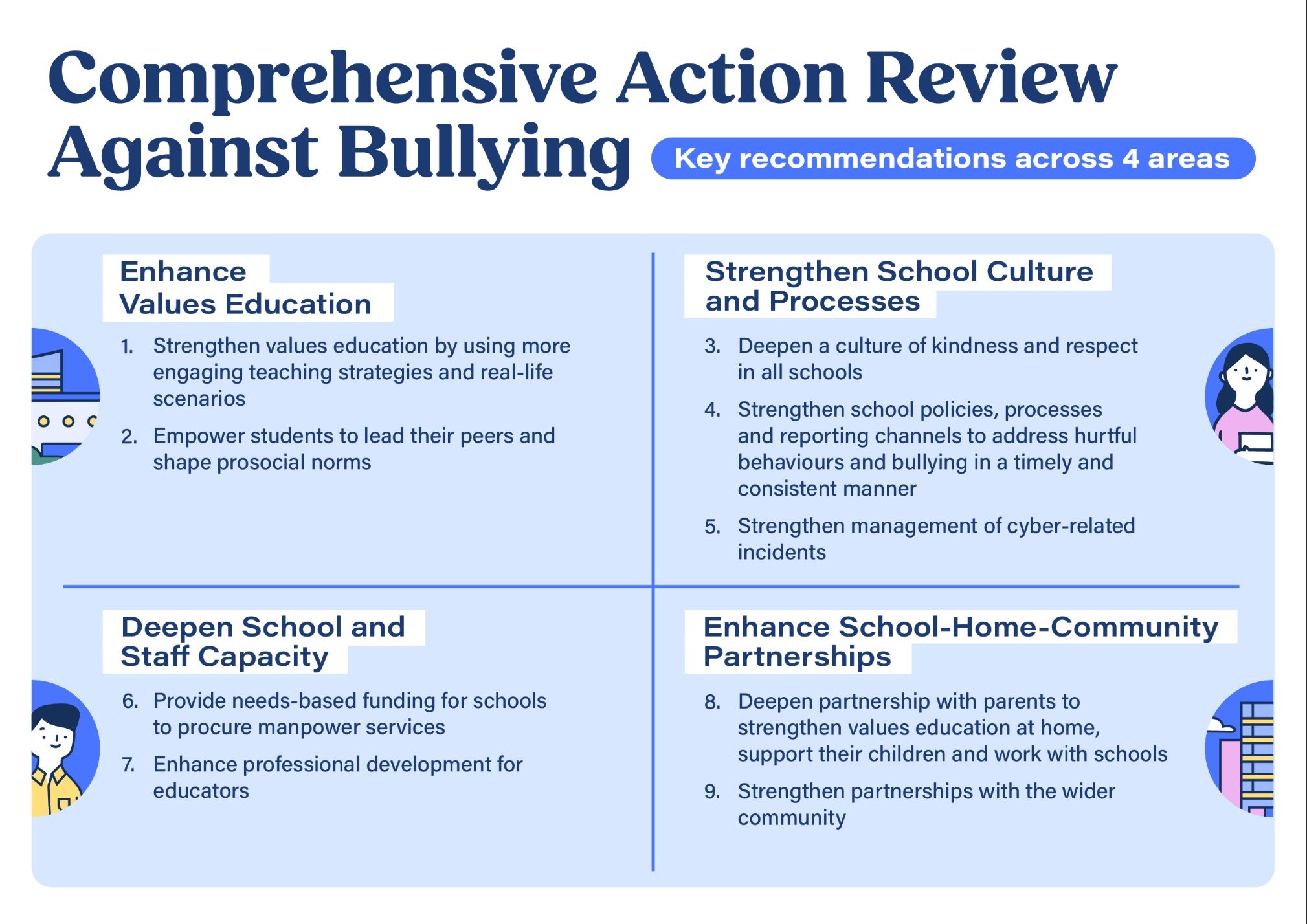
Schools will receive extra, needs-based funding to hire roles such as youth workers, pastoral care officers, and parent liaison officers. These staff members will help manage student issues and reduce the load on teachers.
Ministry of Education (MOE)
The move follows a review involving over 2,000 stakeholders, including educators, parents, and students. The outcome points to one thing: handling bullying needs more than discipline alone.
More support, faster reporting
MOE plans to widen reporting channels, including a new online platform set for 2027. The aim is to make it easier for students to speak up and for schools to respond faster.
Education Minister Desmond Lee said the goal is earlier detection and better case management. He stressed that discipline remains part of the process, but schools should also guide students to learn from mistakes and repair harm, Channel NewsAsia (CNA) reports.
Schools will also receive better guidelines on managing cases. This includes how quickly to inform parents, how to ensure student safety, and how to apply discipline and counselling consistently.
Discipline gets sharper, but not harsher for its own sake
Under the updated framework, serious first-time offences may lead to one to three days of detention or suspension. Serious offences will lead to a lower conduct grade on the student’s behaviour record, and older boys may face caning in severe cases.
These steps mirror earlier measures taken against vaping in schools.
At the same time, MOE is careful not to frame bullying as a one-sided issue. Parents often react fast when their child is involved, but schools need time to gather facts from all sides before acting.
The ministry also warned against judging cases based on social media posts, which often show only one part of the story.
Cases have been rising
Data from MOE shows a steady increase in cases. From 2021 to 2025, there were about three cases per 1,000 primary students and eight per 1,000 secondary students each year. This is up from earlier years, when the figures were lower.
The numbers are not extreme, but the trend is enough to prompt action.
Beyond punishment: shaping behaviour early
MOE is also placing more weight on values education. Schools will build stronger programmes to teach empathy, conflict handling, and social awareness.
Students will be encouraged to step in when they see harmful behaviour, rather than stay silent. The idea is to foster a peer culture in which students look out for one another.
This is backed by training for teachers, who will learn better ways to manage conflicts and engage parents.
A wider effort beyond schools
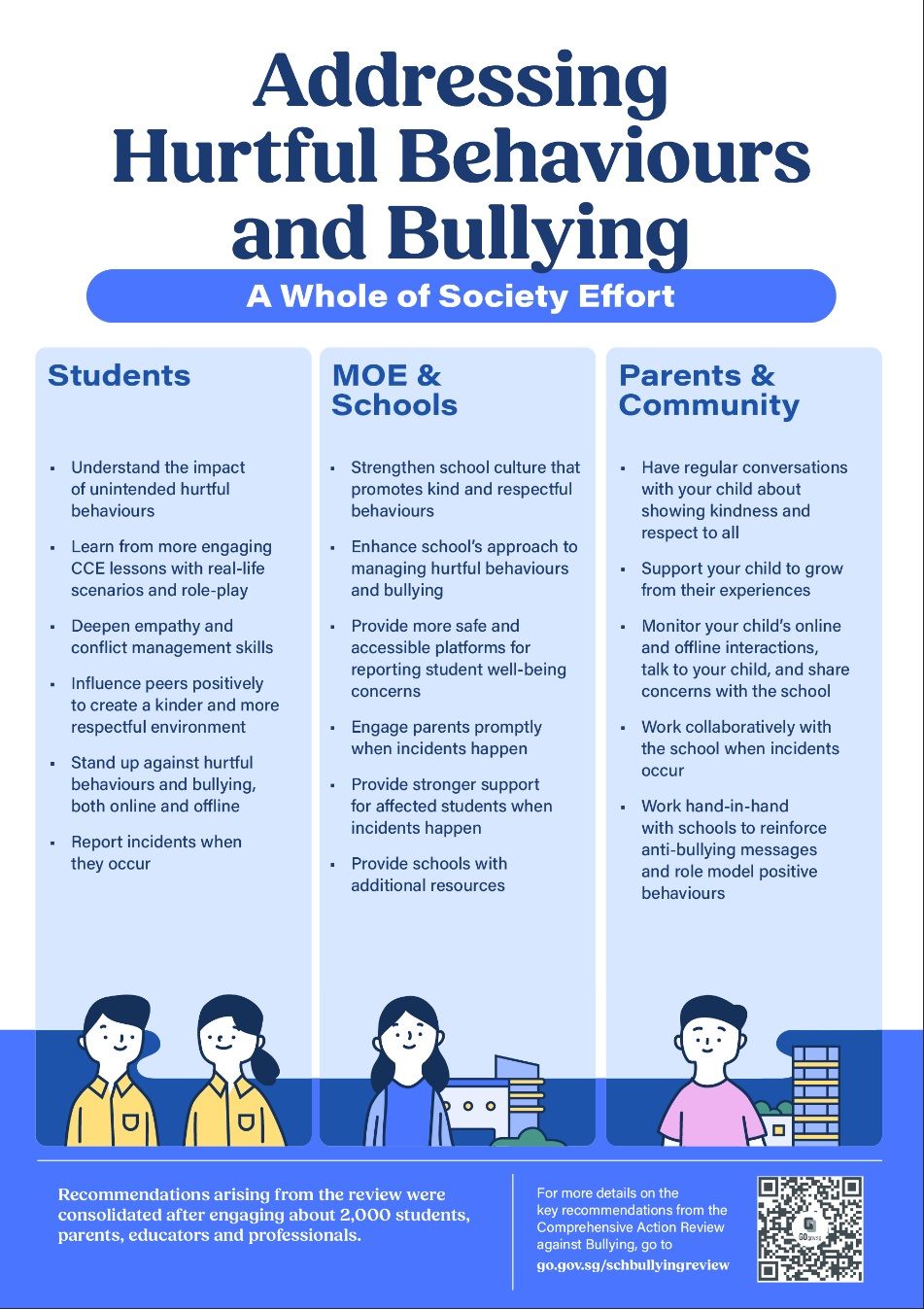
MOE made it clear that schools cannot do this alone. Families and the wider community play a part in shaping behaviour.
Parents are expected to reinforce good conduct at home, while community groups will support efforts to promote respect and kindness.
Ministry of Education (MOE)
This broader approach demonstrates the findings of MOE’s review, which called for coordinated action across schools, homes, and society.
Faster reporting tools and effective processes
Bullying cases gaining traction online have raised public concern over how schools respond. Faster reporting tools and effective processes may help reduce confusion and restore confidence.
There is also a change in tone in how these cases are viewed. The focus is no longer just on punishing bad behaviour, but on managing it early and teaching better responses.
Lesson in dealing with bullying
More staff and better systems will help, but they are only part of the bigger picture to answer such problems. What happens at home, among peers, and in daily interactions shapes behaviour long before any rule kicks in.
If anything, this update is a lesson that dealing with bullying is less about reacting to incidents and more about shaping habits early, consistently, and across every space a child moves through.