



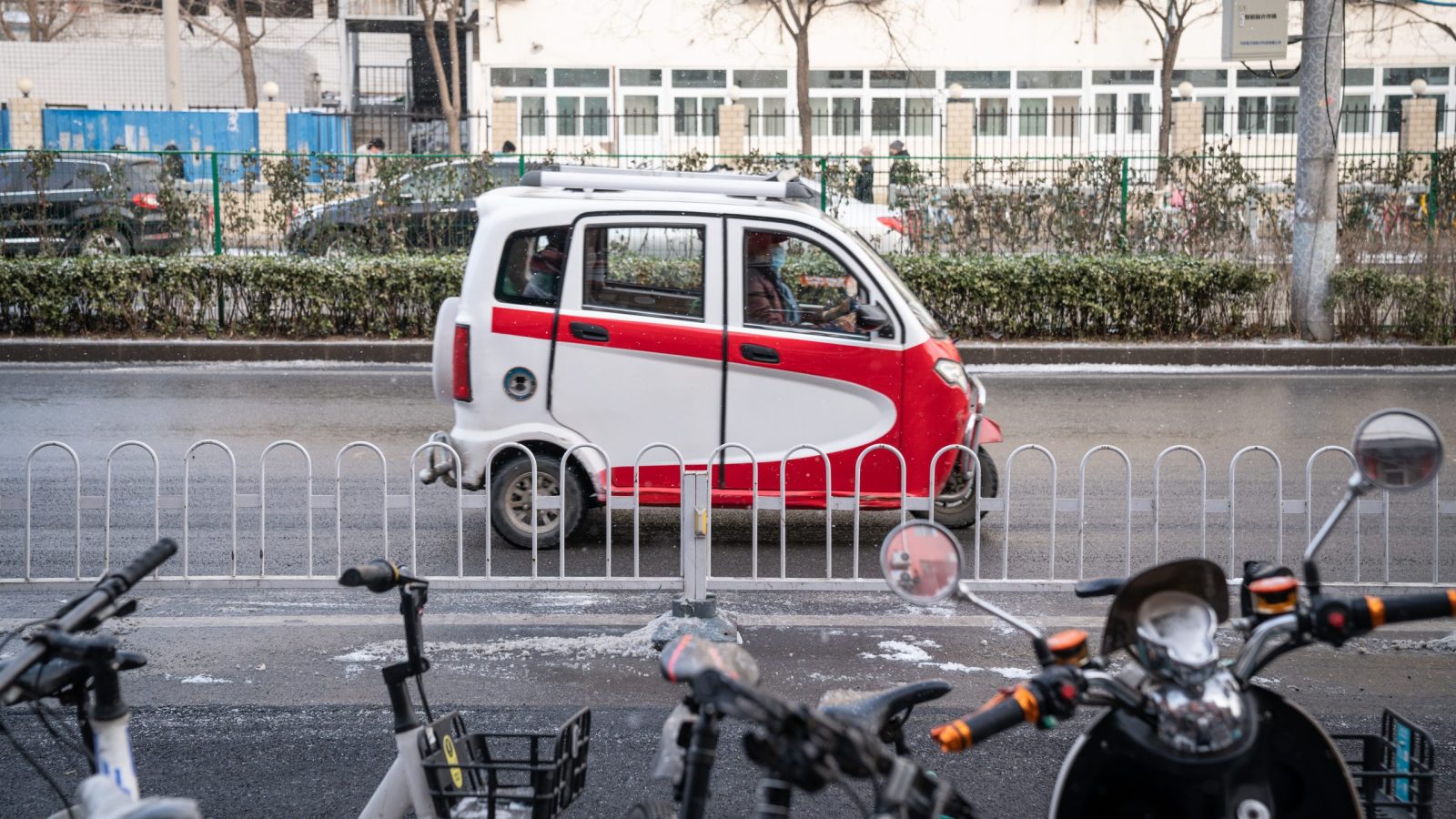
Micro EVs are going nowhere, fast.
These compact electric cars, typically under 2.5 meters and designed for urban driving with top speeds of up to100 kilometres (62 miles) an hour, captured just $11 billion of the $800 billion global EV market last year. Despite a parade of new models, global sales are expected to stay flat at 1.4 million units this year, according to market intelligence firm IDTechEx.
Of the 785 electric car models available worldwide in 2024, only about 78 were micro EVs. These included quadricycles, and modular trucks and vans. The segment occupies an uncomfortable middle ground between affordable two-wheelers and feature-rich larger cars. Potential buyers who want cheap transport pick scooters and those looking for comfort and range pick SUVs. Micro EVs fall through the gap.
“Electric two-wheeler buyers are often those who are in quest of the cheapest possible riding, and such riders usually have short trips, while the customers purchasing bigger electric cars mostly look for longer range, more comfort, and family-friendly features,” William Fletcher, CEO of Car.co.uk, an automotive marketplace, told Rest of World. “Micro EV owners are in the middle of the spectrum longing for a completely enclosed safe vehicle for city commuting without the cost and space requirements of a full-sized EV.”
China leads the micro EV market with one genuine success story: The Wuling Mini EV briefly overtook the Tesla Model Y in October last year to become the world’s bestselling EV that month. It sold almost 350,000 units between October and January.
Even that lead may be short-lived. Rising incomes and an aging population are pushing Chinese consumers toward larger SUVs, according to Pranav Jaiswal, a technology analyst at IDTechEx.
“This is a result of changing demographic dynamics within the country,” he told Rest of World. India tells a similar story. The country’s bestselling EV is MG’s premium Windsor SUV, not the compact Comet that the brand launched in mid-2023. Several price hikes later, the Comet sells about 1,000 units a month, a quarter of the Windsor’s sales.
Pockets of interest exist elsewhere. Japan’s $7,000 Mibot single-seater car surpassed Toyota’s EV sales in 2024 by securing 3,300 preorders, while France allows some micro-car models to be driven by teenagers as young as 14.
Despite the sluggish sales, carmakers keep launching new models. VinFast and Hero Motocorp planned micro EV launches in India; Honda teased one at a Japanese auto show; Toyota unveiled a model with a solar roof; and Hyundai’s Inster expanded beyond South Korea to Europe and the Middle East.
Even Tesla, which mainly produced Model Y SUVs and Model 3 sedans last year, is betting on smaller cars with its two-seater CyberCab, set to start production in April. The company is positioning it as a commercial robotaxis rather than a consumer vehicle, sidestepping the buyer problem entirely.
“We would expect over time to make far more CyberCabs than all of our other vehicles combined,” CEO Elon Musk said during the company’s January 28 earnings call.
Small carmakers focused solely on micro EVs face the steepest climb. Hiriko, a folding micro-car concept born at the Massachusetts Institute of Technology and developed in Europe, never moved beyond a single prototype and collapsed amid fraud. Micro Mobility Systems, the Swiss company that has produced 5,500 of its front-opening two-seater Microlino, is struggling to get the vehicles classified for carbon credits and is now courting Chinese partners, with incentives of up to $50 million on offer, founder Wim Ouboter told Rest of World.
For established automakers, the math is different. Micro EVs are cheaper to produce because of smaller batteries and face looser regulations, making development less resource-intensive, Jaiswal said. The vehicles also help carmakers meet emissions targets and allow experimentation with simpler platforms.
“Even when sales are modest, the learning is valuable,” Rob Delisa, who runs car-leasing site CarLeaseTips.com, told Rest of World. “Automakers view micro EVs as a different sales channel altogether — targeted toward urban rental and fleet use rather than traditional dealership buyers.”