



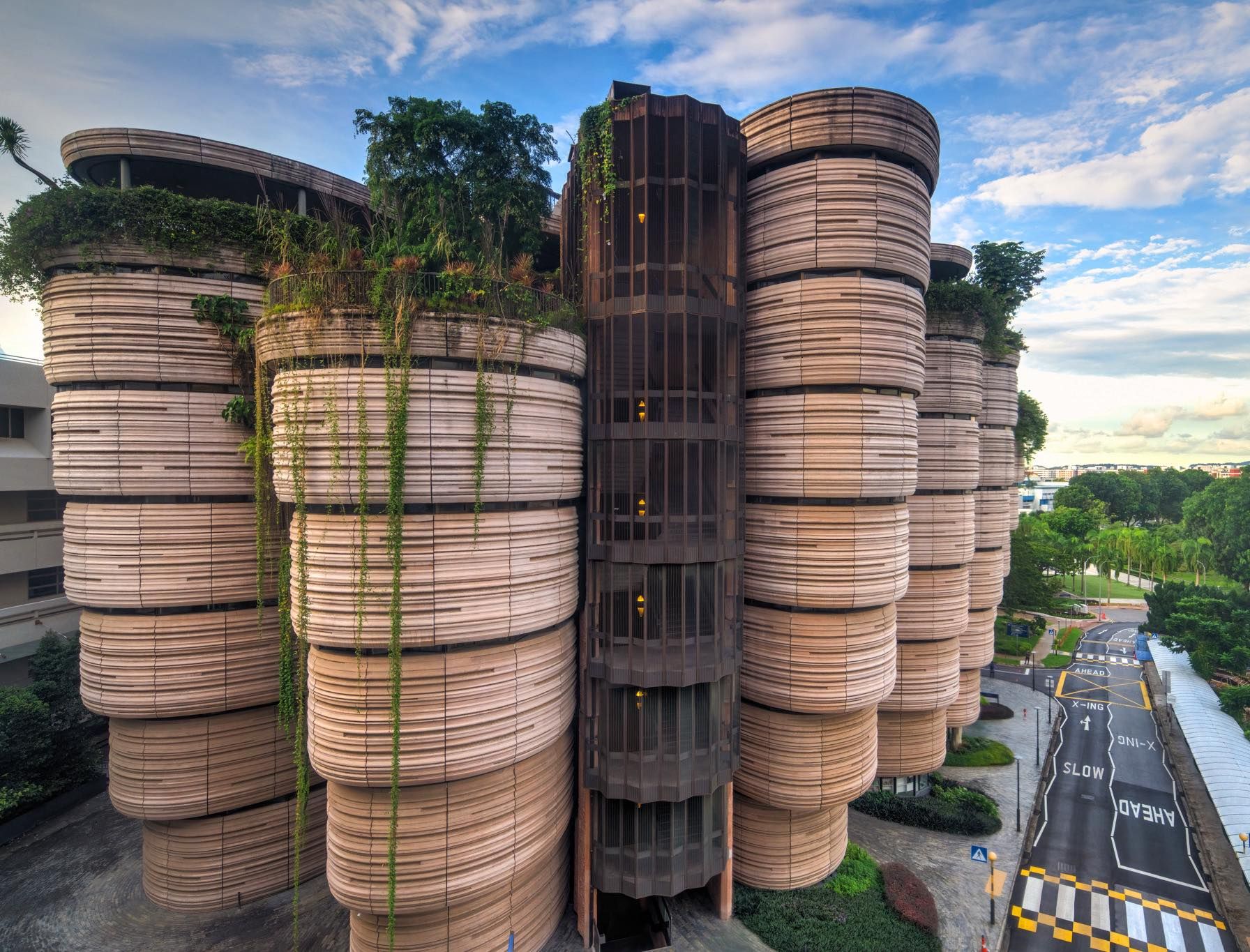
SINGAPORE: Nanyang Technological University (NTU), one of Singapore’s premier public universities, announced on Monday (April 6) that in its endeavour to empower students to thrive in the age of Artificial Intelligence, it will be transforming its undergraduate education programmes.
The university is aiming by 2030 to embed AI into 40% of the courses across all of its 52 undergraduate degree programmes on offer, an eightfold increase from the current 5%. While one-half of the courses will use the technology for personalising learning, the other half will instruct students on how to build, deploy, and manage AI agents in solving real-world problems, NTU said, identifying its goal as “to produce graduates who can not only learn continuously with AI tutors but can also create and work effectively with AI agents.”
Tools for AI empowerment
Starting this August, all of NTU’s undergraduates will be given full access to a suite of premium Google AI tools, such as Gemini Enterprise, Google AI Studio, and Vertex AI, as well as computing credits so that students will be able to build and deploy their own AI agents for learning and problem-solving.
The university added that students can choose to create dozens of these AI agents to support their learning every year. Moreover, these are portable agents that the students will be able to continue using and improving even after they graduate and start working.
Given that NTU is the first university in the city-state to adopt AI education at this scale, its graduates will be highly competitive in the job market.
This AI push is part of NTU’s five-year plan, “to deliver transformative education and deepen its global impact,” NTU2030. For each degree programme, a student completes about 40 courses. Except for programmes in computing and AI, only 5% of the courses incorporate AI at present. By 2030, this will be increased progressively by NTU to 40%.
“As one of the world’s top-ranked universities for AI research, NTU is well-placed to pioneer a new model of education with AI. We hope NTU students will learn how to break down a real-world problem into a series of tasks and orchestrate a team of AI agents to tackle each task. For instance, a business student might deploy AI agents to run randomised control experiments to test various pricing points for a new product on an e-commerce website,” said NTU President Professor Ho Teck Hua.
Singapore’s AI agenda
AI was given a significant focus in this year’s national Budget. A new AI Council will be set up with Prime Minister Lawrence Wong himself as chairman.
“In a changed world, a decisive factor for success will be how we harness new technologies — foremost amongst them, Artificial Intelligence,” he said, underlining the technology’s potential to boost productivity and change lives.
He acknowledged the concerns of many that AI would replace workers, as well as those involving misinformation, bias, and using such technologies ethically.
“These anxieties are real — and we must confront them squarely. But fear cannot be Singapore’s response. If we allow uncertainty to paralyse us, we will fall behind in a world that is moving rapidly ahead,” the Prime Minister added. /TISG
Read also: “AI should benefit many, not just a few”: Josephine Teo addresses job fears as Singapore ramps up AI push