



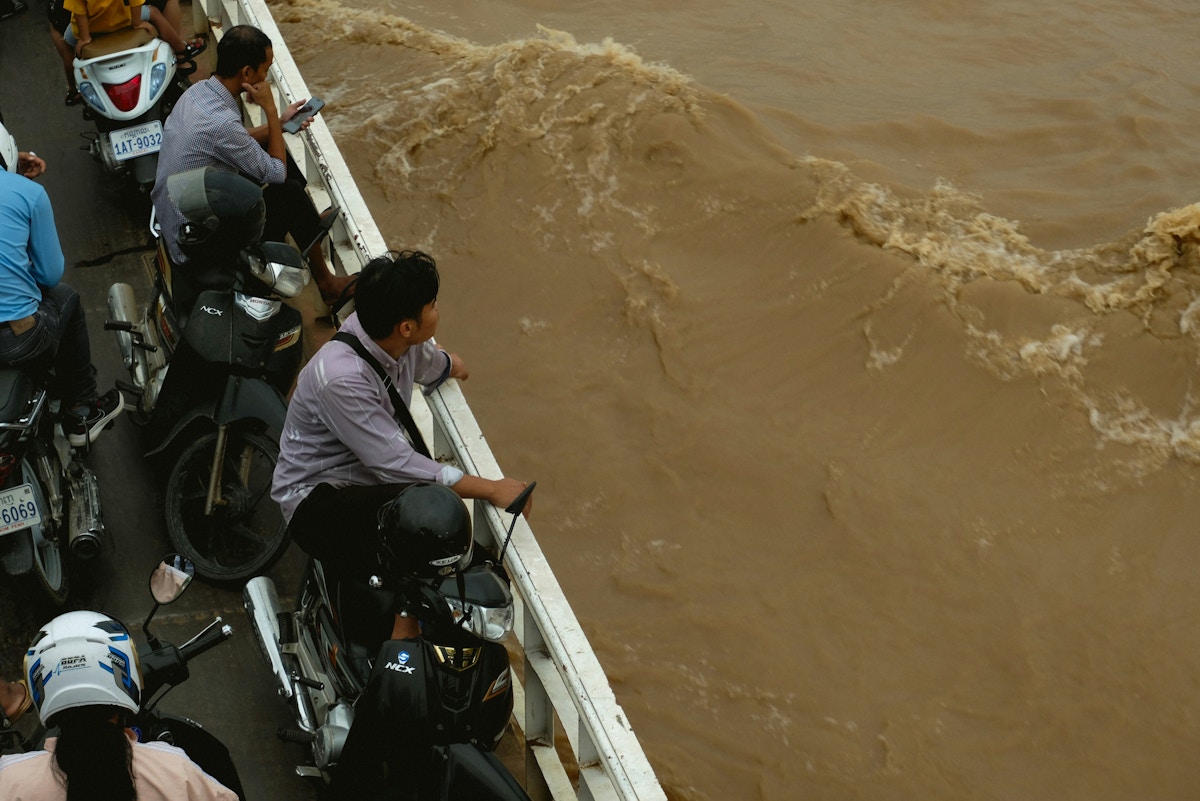
With worsening climate change leading to rising seas, a new commission of global experts has been established to investigate and address its health impacts.
Named the Lancet Commission on Sea-Level Rise, Health and Justice, it is the first to investigate the growing threat of rising seas on human well-being and equity through a health lens.
The 26-member commission was convened with the support of the World Health Organisation’s Asia Pacific Centre for Environment and Health (WHO ACE). Its co-chairs include Christiana Figueres, former executive secretary of the United Nations Framework Convention on Climate Change.
“Dea-level rise is no longer a distant threat. It is already disrupting lives, health and wellbeing, especially for the most vulnerable,” she said in a statement last Wednesday. “By the end of this century, hundreds of millions of people could be displaced, facing floods, food insecurity and disease.”
The commission said that it aims to generate evidence-based, science-led policy recommendations to mitigate health risks, strengthen adaptation and resilience, and ensure equitable and ethical responses to sea-level rise. It will “contribute to global dialogue and decision-making processes, including engagement at key international platforms,” it said in the statement.
The commission’s two other co-chairs are Kathryn Bown, deputy director of Melbourne Climate Futures at the University of Melbourne and Jiho Cha, member of parliament of South Korea.
“Sea-level rise is not just an environmental issue – it is a test of our commitment to people, equity, and future generations,” said Cha. “As a Member of Parliament, I see this as a defining policy challenge of our time. This Commission brings the science and leadership needed to act with urgency and fairness.”
According to WHO ACE, up to 410 million people are projected to live on land below high-tide levels by the end of the century, with hundreds of millions at risk of displacement.
As issues cut across geographies and disciplines, the commission also includes multidisciplinary, intergenerational leadership, according to the commission’s commentary in medical journal Lancet.
“Rising sea levels don’t just threaten coastlines, they threaten lives, livelihoods and basic fairness. This is not only a climate problem. It is a health crisis, a justice crisis, and an urgent call for collective action,” said Professor Dr. Jemilah Mahmood, the executive director of Sunway Centre for Planetary Health in Malaysia and one of the commissioners.
The commission’s other Asian Pacific members include Cunrui Huang of Tsinghua University, Susan Mercado of the Philippines Red Cross and former Department of Health undersecretary, and Sunita Narain of the Centre for Science and Environment in New Delhi.
Among the health risks of rising seas is an increasing susceptibility to waterborne and vector-borne diseases, such as malaria and dengue. This is typically caused by failed sanitation systems and a lack of accessible freshwater supplies, creating food security risks, especially for those living in the coastal areas.
“Sea-level rise is no longer a distant threat – it is a public health emergency unfolding now,” said Dr Sandro Demaio, director of WHO ACE.
The commission will also integrate for the knowledge perspectives of coastal and Island communities, taking into account lived experiences, First Nations Knowledges, Indigenous sciences and robust scientific analysis, it said.