



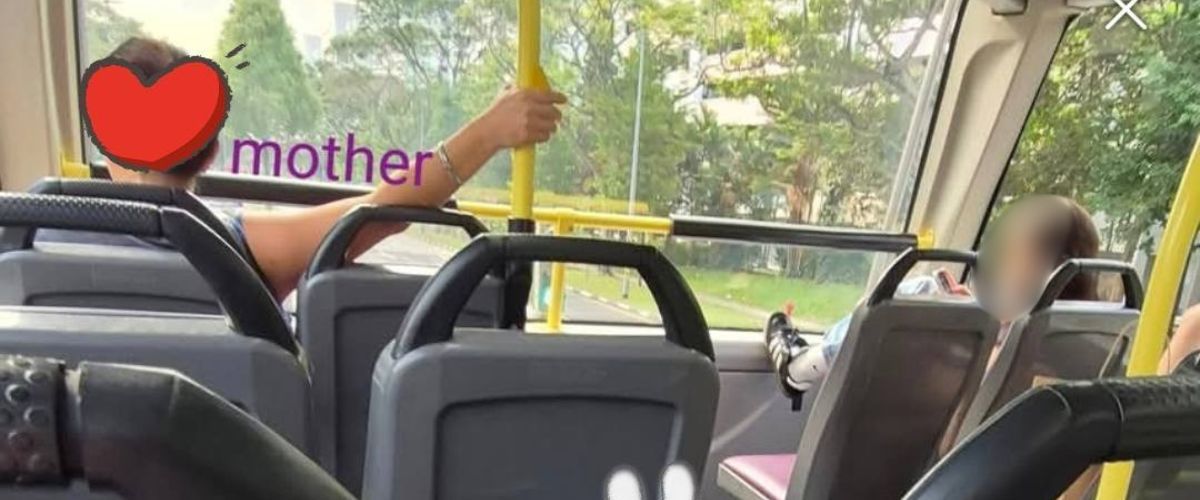
SINGAPORE: A recent post on the Facebook group COMPLAINT SINGAPORE on April 10 has sparked fresh discussion over commuter behaviour, after a user described witnessing what they considered inconsiderate conduct on a double-decker bus.
The post recounted how the writer, who had been napping during the journey, woke up to see a young passenger seated several rows away with her feet placed on the bus seat. According to the account, the individual’s mother, who was present, did not intervene or ask her to put her legs down.
The incident comes as a follow-up to a recent report by The Independent Singapore, in which a commuter lamented what they described as worsening bus etiquette, despite acknowledging that “Singaporeans are kind and helpful”.
The incident has since drawn a wave of reactions online, with many netizens weighing in on standards of public etiquette.
Hygiene concerns raised by commenters
Some users highlighted the potential health implications of placing shoes on shared seating. One comment read: “The soles of shoes walk on many surfaces and may transfer germs and Dirt, E. coli, and Norovirus to others. Very antisocial and selfish, as it treats public transport like a personal, private space. Will she do it at her own houses [sic]?”
Such responses reflect broader concerns about hygiene in shared environments. Public transport seats are used by thousands daily, and behaviour perceived as unclean can quickly become a point of contention. The mention of bacteria and viruses also shows how etiquette issues are often tied to health anxieties, especially in populated urban settings such as Singapore.
Frustration over inconsiderate behaviour
Other netizens turned their attention to the role of parents in shaping behaviour. One Facebook user remarked: “I used to learn the phrase in Cantonese ‘no family teach’. Nowadays, parents don’t teach, they dote [on] their kids. I saw a boy put his legs up once, and I taught him even though it should be none of my business.”
The comment suggests a perceived shift in parenting styles, with some believing that modern approaches may prioritise indulgence over discipline. It also raises the question of whether bystanders should step in when they witness such behaviour, reflecting a tension between communal responsibility and social boundaries.
Another user added: “Maybe the mother did the same when she was young.” This remark implies that such habits may be learned behaviour, passed down or normalised over time, rather than isolated incidents.
Several commenters expressed broader dissatisfaction with what they see as declining social etiquette. “Now, [the] young generation themselves are inconsiderate and ill-mannered,” one wrote, pointing to a generational critique that often surfaces in online discussions about public conduct.
While such views may generalise behaviour across age groups, they highlight a recurring sentiment that social norms are shifting in ways some commuters find concerning.
Beyond hygiene and manners, some netizens also pointed to potential safety hazards. One comment noted: “wait till the bus jam brakes then she will know”. Sudden braking could lead to injury, particularly if passengers are not seated properly, adding another dimension to the debate.
These conversations convey that there is growing sensitivity towards behaviours that disrupt shared spaces. As these discussions continue, this event shows how everyday encounters on public transport can quickly become a topic for wider debates about hygiene, parenting, and social responsibility.