



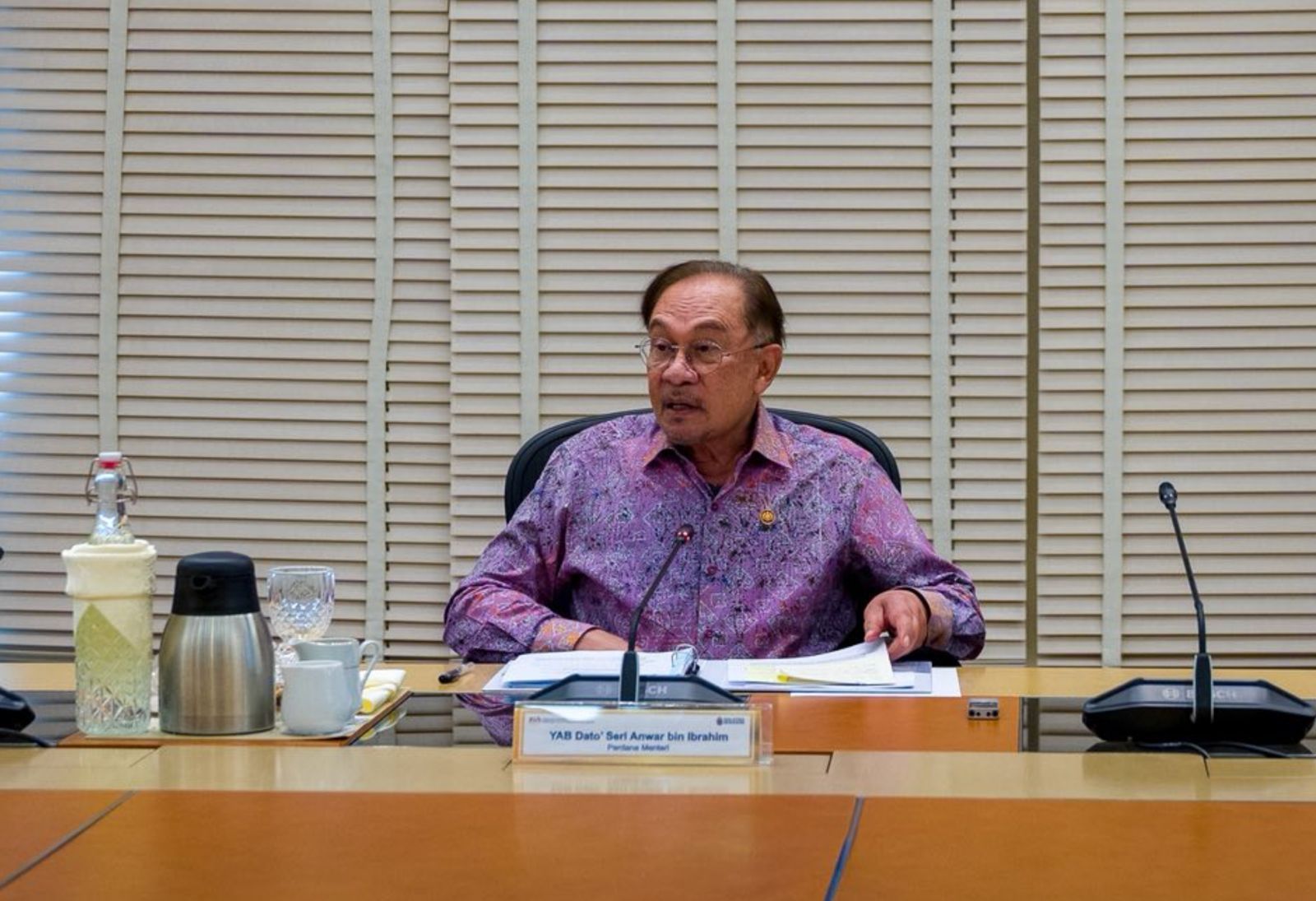
Prime Minister Anwar Ibrahim has urged Malaysians to brace for rising prices driven by the global oil crisis sparked by the Iran conflict. Speaking at the Transport Ministry’s monthly assembly in Putrajaya, he stressed that the crisis is already affecting Malaysia, despite perceptions otherwise.
Anwar noted that while fuel prices have not surged sharply this month, fertiliser costs are climbing due to heavy reliance on imports. He warned that insurance premiums and shipping charges are also rising, increasing refinery costs in Pengerang.
Furthermore, he called on civil servants to support government efforts and ensure the public is prepared for the challenges ahead.
An X user suggested that petrol subsidies, commonly known as BUDI95, may be revoked. The user highlighted the Prime Minister’s earlier remarks when he was the opposition leader, where Anwar argued that Malaysia, as an oil‑producing nation, should maintain low fuel prices.
Another user argued that the government should have issued an earlier warning to allow the public to prepare before the situation worsened. He added that the crisis could have been managed more effectively if proactive measures had been taken sooner.
This sentiment is spreading widely across Malaysian communities. One noted that for weeks, they were told there was no crisis, only to now be confronted with sudden warnings. The abrupt shift has left many feeling unprepared, as repeated assurances of stability gave way to an unexpected declaration of crisis.
Others complained that price sensitivity in a connected world is a serious problem. If a situation happens on one side of the world, it seems that Malaysia will receive a price increase on certain goods.
Malaysia has now reached the point of being a net oil importer, a precarious position for a nation that is itself an oil producer. This vulnerability underscores the wider regional challenge, as the situation could be even more difficult in other Southeast Asian countries.
Ultimately, the outlook hinges on how the conflict in the Middle East unfolds, with global energy markets dictating the scale of the impact.