



Following the collapse of the negotiations in Geneva (INC-5.2) in August – part of the United Nations-led process to draft a legally binding global treaty covering the full life cycle of plastics – informal talks in Japan aim to salvage the effort after repeated failures to reach a legally binding agreement to end plastic pollution.
The green watchdog said the plastics boom is being driven by fossil fuel and petrochemical giants banking on surging production of packaging, including for ready meals and other ultra-processed foods, even as research links plastics to polluted ecosystems, microplastic exposure and toxic chemical contamination in human bodies.
In a report titled “The hidden health risks of plastic-packaged ready meals”, it noted that plastics are already projected to account for nearly half of oil demand growth by mid-century, with industry forecasts showing total plastic demand more than doubling from 2024 levels by 2050 under business-as-usual growth of 2.5 to 5 per cent a year. Plastic packaging makes up about 36 per cent of all plastics, much of it used for convenience foods and takeaways that are increasingly sold in microwaveable trays and films.
Greenpeace’s analysis of 24 peer‑reviewed studies highlighted how these containers can release a “worrying cocktail” of microplastics and chemical additives into food, especially when heated.
In some tests, polypropylene trays shed an estimated 326,000 to 534,000 microplastic particles into a single portion after five minutes in a microwave, several times higher than when the same containers were heated in an oven. The report also flagged routine leaching of chemicals such as plasticisers, antioxidants and other additives, including substances with known or suspected links to cancers, infertility, metabolic diseases and neurodevelopmental harm.
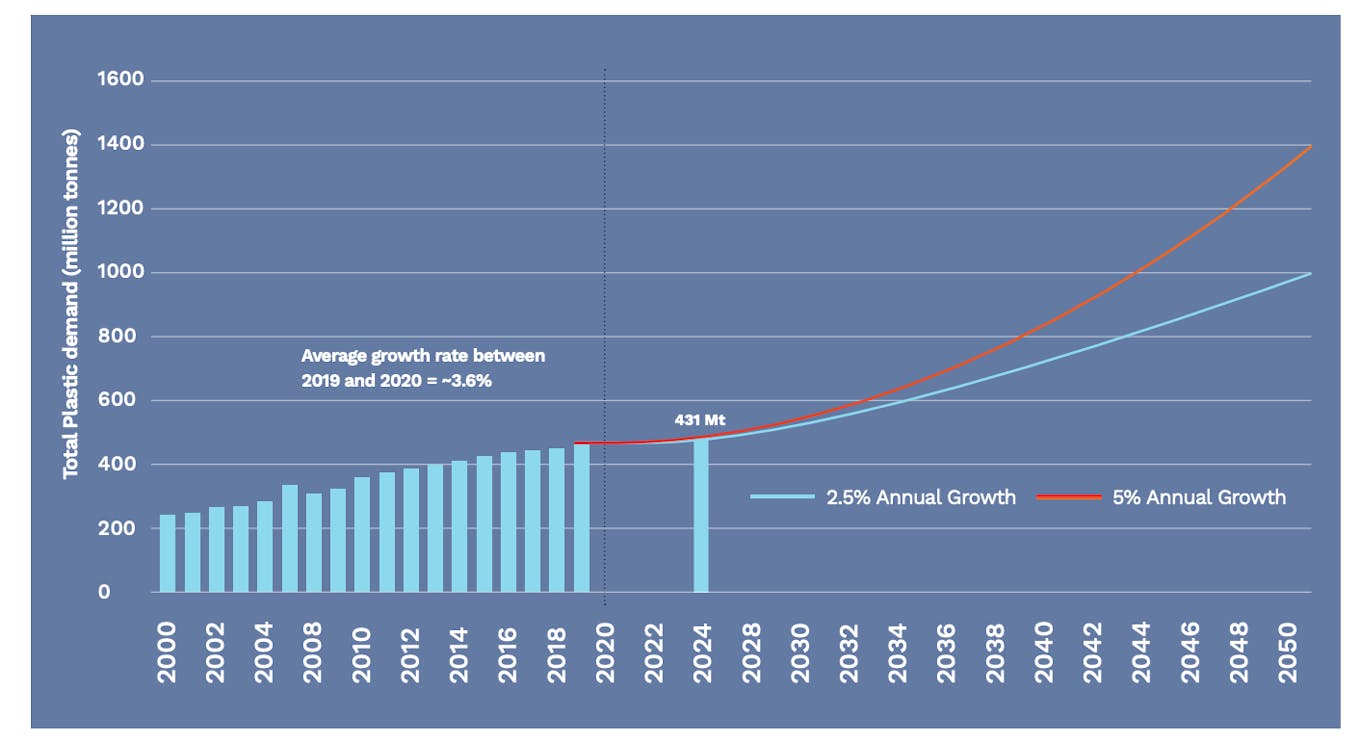
Projected demand growth for all plastics by 2050, in metric tonnes. Image: Greenpeace
Yet regulation has not kept pace with the science, the analyses argued, with at least 1,396 food‑contact plastic chemicals already detected in human bodies and three‑quarters of chemicals found or used in plastics still not assessed for safety.
“People think they’re making a harmless choice when they buy and heat a meal packaged in plastic… Governments have let the petrochemicals and plastics industries turn our kitchens into testing labs,” said Graham Forbes, global plastics campaign lead from Greenpeace USA.
Plastic-packaged ready meals are one of the fastest-growing segments of the global food system, worth nearly US$190 billion and rising sharply as households rely more on convenience food, according to research done by Towards FnB, a global consulting and market research firm.
In 2024, production of ready meals amounted to a volume of 71 million tonnes worldwide, averaging 12.6 kilogrammes per person, with the cost of a ready meal and revenue per capita also expected to increase, according to market research published by Statista.
As governments negotiate the United Nations Global Plastics Treaty, Greenpeace urged negotiators to act on the precautionary principle and end the uncontrolled and unregulated plastic and chemical contamination that they say threatens human health.
“Are we being poisoned while trying to feed our families? The risk is clear, the stakes are high and the time to act is now,” said Forbes. “We cannot rely on misleading promises from corporations. Governments must act now by delivering a strong Global Plastics Treaty that protects human health and cuts plastic production at the source.”