



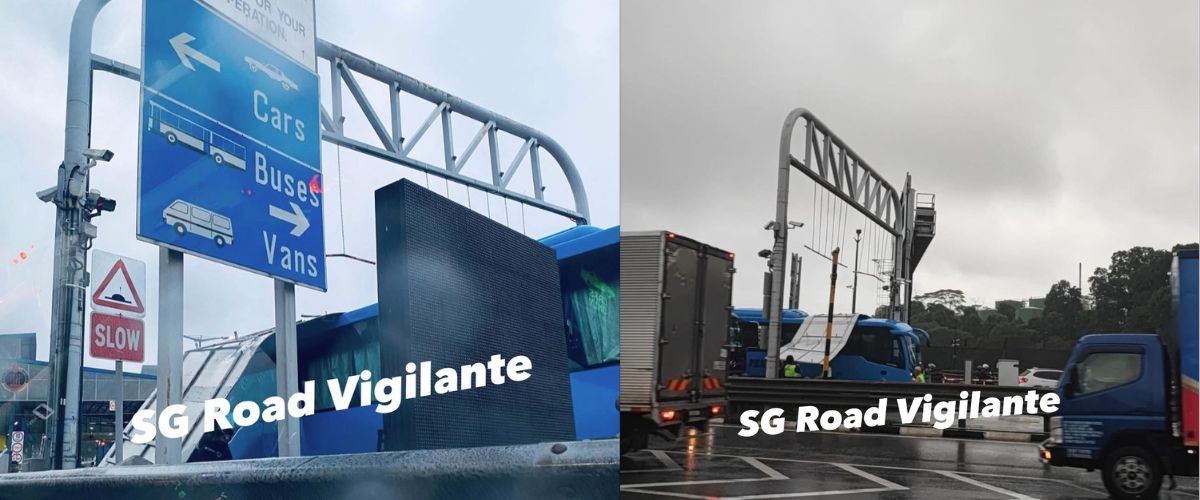
JOHOR/SINGAPORE: An unusual chain of events unfolded on April 6 along the Johor Bahru–Singapore Causeway, when a Malaysia-registered bus was unexpectedly brought to a halt. However, this was not done by enforcement authorities, but by a fallen road sign.
The incident gained traction after it was shared on the widely followed Facebook page SGRV FRONT MAN, where it quickly drew attention and discussion. According to the post, the bus had allegedly accumulated approximately S$1,200 in unpaid fines issued by Singapore’s traffic authorities and the Urban Redevelopment Authority (URA), with some offences reportedly dating back to January 2025.
A twist of fate or divine intervention?
What captured the public imagination was not merely the unpaid fines, but the almost poetic way in which the vehicle was stopped. The bus was immobilised after a roadside sign reportedly fell on the bus itself. The original post described the moment with a touch of irony: “when the heaven decided enough is enough.”
For many observers, the coincidence seemed almost too precise. Of all the vehicles crossing one of the region’s busiest land checkpoints daily, it was this particular bus, with its long-standing record of unpaid penalties. that was singled out by such an unexpected obstruction.
The incident has since been widely interpreted online as a form of “divine intervention,” highlighting the unpredictability of real-world consequences catching up with unresolved violations.
Netizens react with humour, sarcasm and criticism
The online response reflected a mix of amusement and frustration, with many comments laced in sarcasm rather than outright anger. One user quipped, “The signage triggered you to search his fine, haha!”, a light-hearted remark that pokes fun at how the incident only gained attention because of the accident itself.
Other reactions were more pointed, blending humour with criticism of enforcement agencies. A comment calling out “LTA and Traffic Police, you all sleeping ah?” carries a distinctly sarcastic edge, using colloquial phrasing to express dissatisfaction. Beneath the humour, however, lies a serious suggestion: that authorities should take firmer action, such as impounding the vehicle until outstanding fines are settled. This reflects a sentiment that enforcement should be more immediate and visible.
More analytically inclined responses questioned systemic shortcomings. One commenter wondered how such vehicles could “avoid” detection and proposed that the Immigration & Checkpoints Authority should maintain integrated records. Their comment read: “Should ICA has [sic] a data record to identify these vehicles entering the checkpoints. How can they not using [sic] AI to track all incoming vehicles…”
Unlike the more sarcastic remarks, this response takes on a constructive tone, pointing towards technological solutions and improved inter-agency coordination.
Finally, some netizens returned to humour to emphasise the irony of the situation. “The sign is also not happy… go pay [the] fine,” one wrote, referring to the fallen sign as if it were enforcing the law itself.
While the fallen sign may ultimately be explained as a simple accident, its timing has turned a routine traffic obstruction into a talking point about accountability, enforcement, and chance. Whether seen as a coincidence or cosmic irony, the incident has struck a chord for many; it serves as a reminder that sometimes, consequences arrive in the most unexpected ways.
Read also: ‘King of the road’: PMD spotted on main road crossing sparks online debate over road safety