



The regional heat roadmap, published by nonprofit Asean Centre for Energy (ACE), projected that fast-growing cities across Southeast Asia will endure “unprecedented” warming trends that could push infrastructure, health systems, and economies to their limits.
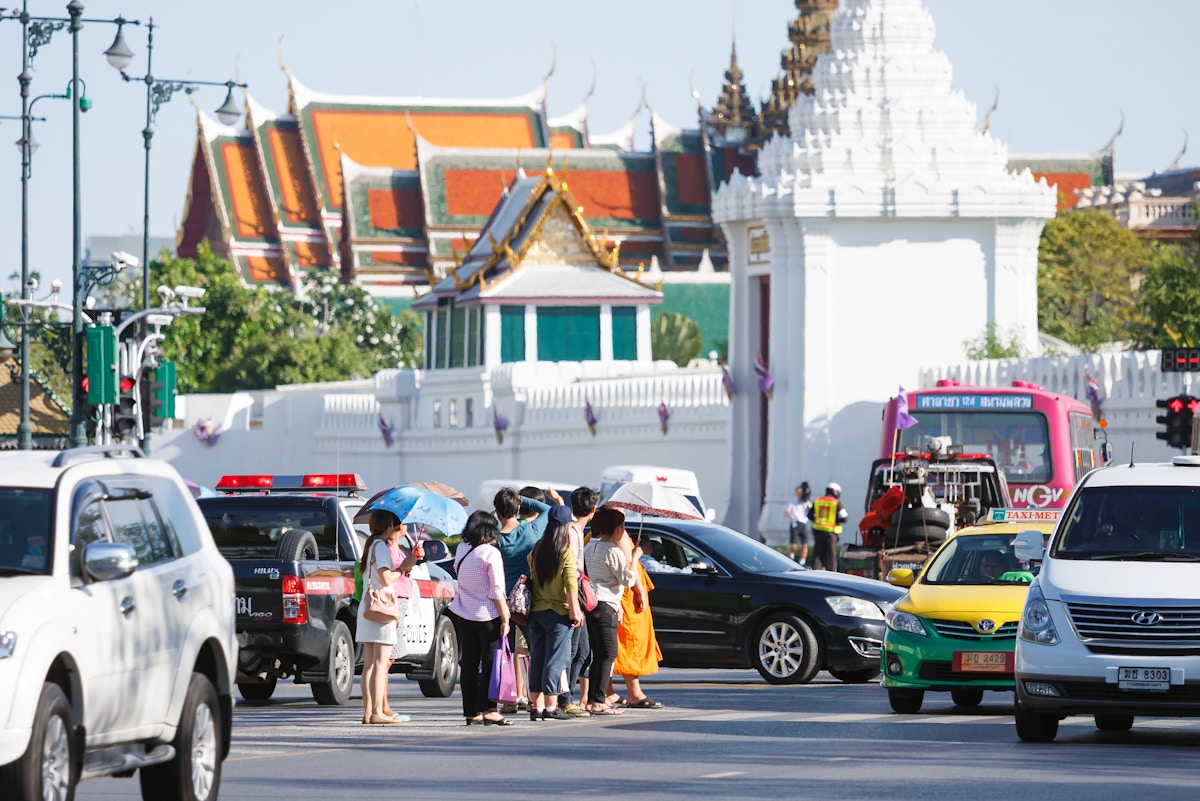
By 2050, Southeast Asian cities could face between 85 and 120 days each year with temperatures above 35°C, the study found. Thailand’s capital, Bangkok, is expected to bear the brunt of this trend, with its average temperature projected to reach 38.1°C.
This level of sustained heat will significantly heighten health risks like heatstroke, heat exhaustion, difficulty in sleeping, as well as socioeconomic impacts such as increased household expenses and reduced productivity at work and in school, said researchers.
Bangkok is not alone. Ho Chi Minh City in Vietnam is forecast to reach 37.7°C by mid-century, followed by Manila at 37.2°C, Kuala Lumpur at 36.9°C, Jakarta at 36.4°C, and Singapore at 36.1°C.
Bangkok’s average temperature projected to reach 38.1°Celsius by 2050, the highest among Southeast Asian neighbours. Image: ACE
The study also showed strong urban heat islands – which happens when cities become hotter than nearby rural areas because of more concrete and asphalt, fewer trees, and human activity – in the major Southeast Asean cities.
Existing research found Jakarta to be up to 3 to 6°C hotter than rural areas, while Manila’s night-time temperatures were more than 2°C higher, and Bangkok about 3°C hotter on paved surfaces than in green spaces. Urban greening can lower air temperatures by up to 4°C, making it a practical way to cool cities, the study found.
These hotter conditions hit vulnerable groups hardest. Monitoring in Malaysian cities has found dangerous indoor and outdoor heat, especially for children, older people, and low-income households in informal settlements, markets, transport hubs and care facilities, pointing to the need for targeted planning and protection.
The clustering of these projections underscored how densely populated coastal and low-lying cities are emerging as frontline hotspots of global heating, with implications for millions of residents who already live with high humidity and limited access to cooling, noted the study.
Lag in passive cooling strategies
However, Southeast Asian countries are still falling behind on passive cooling, even as governments roll out more policies on paper, said the analysis.
Passive cooling measures such as natural ventilation, reflective roofs and better-insulated walls and windows can cut cooling energy savings of 10 to 30 per cent through natural ventilation and hybrid systems, and 35 to 70 per cent through high-performance glazing like advanced, energy-efficient window systems designed to maximise natural light while minimising heat transfer, researchers found.
Malaysia, Indonesia and Thailand already offer low-interest loans to help public and commercial buildings upgrade their cooling systems, while Vietnam and the Philippines are rolling out schemes based on Singapore’s programme to ease upfront costs for energy-efficient retrofits.
But funding for the early stages of passive cooling projects is still hard to find, with most support focused on construction rather than project design, and few tools to reduce risks for private banks, it noted.
Singapore, Malaysia and Thailand now channel an estimated US$1 to 10 billion a year through their green finance markets, yet Cambodia, Lao PDR, Myanmar and Brunei remain far behind, with tiny markets of under US$50 million and limited institutional capacity, the report said.
“Bridging this divide requires strengthened regional financial integration whilst preserving the flexibility necessary to accommodate diverse national market conditions”, said authors.