



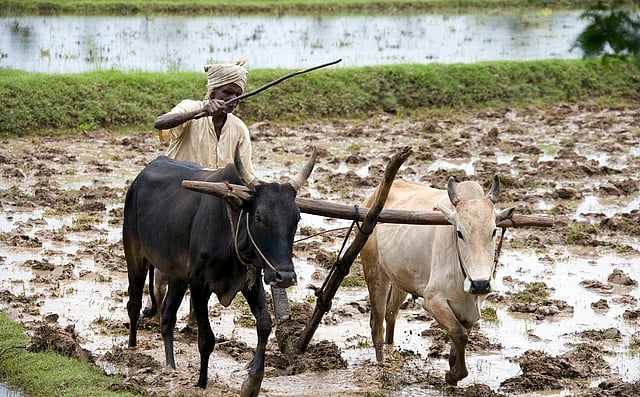
With AI increasingly influencing agriculture, experts advocate for a farmer-centric approach to ensure equitable benefits by 2047.
India’s agricultural landscape is undergoing a significant shift as artificial intelligence (AI) becomes integral to farming practices. Amidst climate challenges, small landholdings, and limited resources, AI presents an opportunity to enhance productivity. However, a central question arises: who will benefit from the increased efficiency AI can provide? This is not merely a philosophical query but a critical economic consideration that could shape the future of Indian agriculture over the next twenty years.
The discourse often emphasises the potential of AI to assist farmers, capable of analysing vast data sets related to weather, soil conditions, and market trends. Such analysis can guide decisions on sowing, irrigation, pest control, and harvesting. Additionally, in sectors such as livestock and fisheries, AI technologies could enhance disease monitoring and productivity.
Yet, while AI could indeed increase crop yields, the enhancement of a farmer’s income is dependent on numerous factors. Increased production does not automatically translate to higher profits; it also depends on the associated costs of technology adoption, the selling price of the produce, and the farmer’s negotiating power. If multiple farmers boost production of the same crop, the market price may decline. Furthermore, if proprietary inputs are required, profits may flow to input suppliers, while platforms controlling market access could capture additional value downstream.
The relationship between productivity, input costs, market prices, and bargaining power will ultimately dictate how much profit from AI advancements reaches farmers. This core issue needs to be front and centre in India’s strategy for integrating AI with agriculture.
As agriculture has long faced substantial information voids, farmers often make decisions based on incomplete data regarding climate, pest outbreaks, and market conditions. AI has the potential to bridge some of these gaps, allowing for better-informed decision-making. However, there is a dilemma: while AI might democratise information, it could also centralise it. A farmer who accesses a localised weather report could gain valuable insights, but larger commercial platforms that possess comprehensive data may hold significant advantages, thereby deepening existing disparities.
The discussion around agricultural data is increasingly pertinent. India is generating vast amounts of data through land records, crop surveys, and government programmes. As AI systems improve at integrating these datasets, questions surrounding control and access to agricultural data will become crucial. These issues are not merely technical; they encompass economic power dynamics as well.
India’s experiences with digital public infrastructure offer a critical framework for approaching agricultural AI. Open and interoperable systems can reduce market entry barriers and prevent monopolisation by a few dominant players. Thus, the aim should be to cultivate an agricultural AI ecosystem instead of merely developing an AI market. By governing datasets, establishing communication between digital platforms, and adhering to common standards, various stakeholders, including startups, agricultural institutions and farmer cooperatives, can collaboratively develop solutions that do not necessitate rebuilding basic infrastructure.
Farmer Producer Organisations and cooperatives have an essential role to play. These groups can facilitate access to new technologies, share insights, and negotiate more advantageous terms for small-scale farmers. Collective action can render AI more accessible and bolster farmers’ bargaining power as agricultural value chains evolve with technology.
Given that many farmers in India operate on a small scale, the parameters of AI must account for the realities of fragmented landholdings and variable connectivity. There is a risk of creating a technological divide within agriculture; wealthier farmers might rapidly adopt advanced technologies, leaving smallholders reliant on traditional methods. This disparity could worsen over time, leading to further inequities in productivity and economic outcomes.
To mitigate this, it is vital that AI’s introduction is tied to complementary investments in infrastructure. AI cannot replace the necessity for resources like water, storage solutions, or rural roads. Accurate recommendations hold little value if farmers lack the means to implement them practically. Hence, the returns from agricultural AI will hinge considerably on the surrounding infrastructure and institutional frameworks.
Moreover, agricultural extension services must adapt to integrate AI’s offerings. While AI can produce highly localised information, human professionals will remain essential for contextualising this data and guiding implementation. Agricultural choices are not solely dependent on data; they require consideration of resources, risk tolerance, and local contexts.
It is also crucial to rigorously evaluate AI systems. The agricultural landscape in India is diverse, featuring varying crops, regional characteristics, and farming practices. A model that works effectively in one area may not yield the same success in another. Therefore, assessing AI-generated advice against actual farming outcomes is vital. The emphasis should be on measuring impacts at the farm level rather than just the uptake of farming platforms.
Ultimately, the criteria for success must encompass improvements in yields, input management, resource usage, and financial returns for farmers. Looking towards 2047, prioritising a human- and farmer-centred approach to AI in agriculture will be essential in ensuring that the benefits of technological advancements are equitably distributed across the farming community.