



SINGAPORE: About 10,000 more households in Tengah will be offered centralised cooling under a new contract awarded to Keppel, as Singapore continues building its first large-scale smart town.
The Housing & Development Board (HDB) confirmed on April 16, 2026, that Keppel will design, install, and operate the system across nine upcoming Build-to-Order (BTO) projects. Combined with an earlier deal in 2024, about 14,000 households across 12 Tengah projects will have access to the system.
Residents are offered an energy-efficient alternative while supporting greener living
This latest contract runs for 20 years and covers projects in Brickland, Park and Forest Hill.
It builds on Keppel’s earlier appointment for three Tengah BTO projects awarded in September 2024. Together, the expansion marks a steady push to scale up centralised cooling as part of Tengah’s identity as a smart and sustainable town.
Housing & Development Board (HDB)
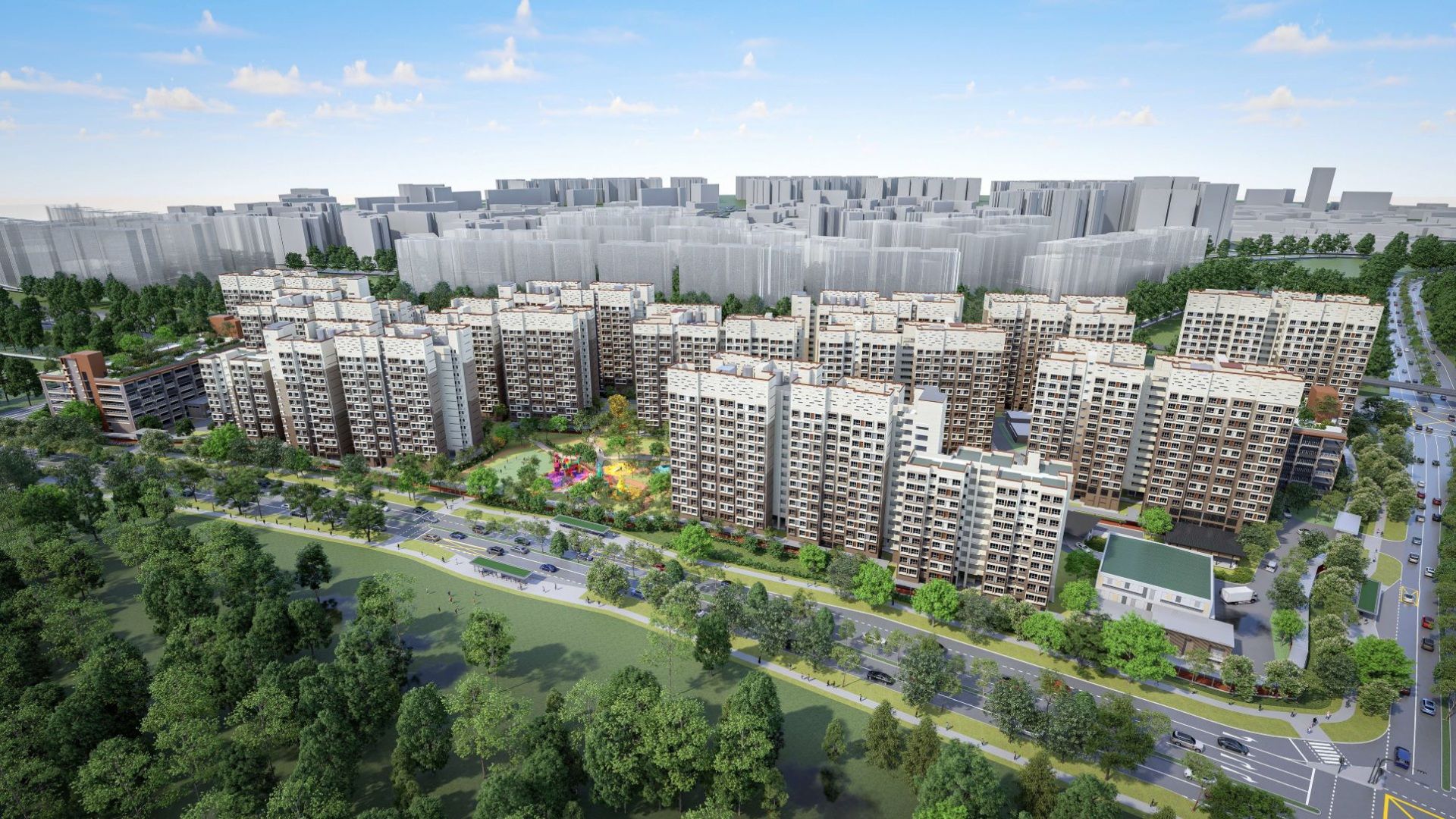
Brickland Weave in Tengah is one of three BTO projects in Keppel’s first CCS contract
HDB’s Chief Sustainability Officer, Tan Sze Tiong, said the goal is to give more residents an energy-efficient alternative while supporting greener living.
The centralised cooling system uses chillers piped into homes to cool the space
Instead of each flat installing its own air-conditioning condenser, the system uses central chillers to produce cold water. That chilled water is then piped into homes to cool the space.
HDB said this method can use up to 30% less energy than conventional air-conditioning.
Residents who opt in early can also have their cooling ready when they collect their keys, avoiding the need for separate installation work.
Lower upfront equipment costs and less maintenance
Keppel said the system is designed for long-term reliability, with lower upfront equipment costs and less maintenance needed over time.
The company plans to refine how pipes are installed within flats to better match interior layouts, giving residents more flexibility in home design.
Beyond the homes, all systems will be linked to Keppel’s operations centre. The setup uses data analysis to monitor performance, detect faults early, and adjust cooling supply based on demand. This includes predictive maintenance and real-time monitoring to improve consistency.
A system that reduces consumption
Cooling makes up a large share of household energy use in Singapore. A system that reduces consumption at scale could have a meaningful impact on both costs and sustainability targets.
Tengah is effectively a testing ground. If the model works well, it could shape how future housing estates handle cooling. If it falls short, it risks eroding confidence in centralised systems.
Addressing past concerns and avoiding a repeat of earlier problems
The expansion comes after earlier Tengah projects faced complaints over centralised cooling systems run by another provider.
Residents had raised issues such as weak cooling, leaks and vague pricing structures. These concerns led to fee waivers and adjustments at the time.
Keppel’s updated approach places more focus on system design, monitoring and maintenance. The intent is to avoid a repeat of earlier problems.
The basics still matter most
The idea behind centralised cooling is that it uses less energy, reduces clutter, and simplifies upkeep.
But for residents, the basics still matter most. The system must cool effectively, run without leaks, and stay affordable.
If those are met, adoption will follow naturally. If not, even the best design will struggle to win people over.