



Hardly anyone would recognize Fabio Azevedo if they passed him on a street in São Paulo. When he begins to speak, however, everyone knows who he is: the voice of some of the best-known characters in Hollywood films dubbed in Portuguese, including Doctor Strange in the Marvel movies, and the Beast in the live-action film Beauty and the Beast.
Azevedo now has a role that may be his most challenging yet: protecting voice-over actors in Brazil from artificial intelligence. As studios, production companies, and streaming platforms increasingly turn to AI for voice-overs and to dub English-language content into local languages, more than 2 million full-time and part-time voice actors worldwide stand to lose their livelihood and the rights to their voice.
We make foreign content sound Brazilian with our Brazilian idiosyncrasies; with AI, we lose that.”Fabio Azevedo, voice actor and president of the Brazilian Association of Dubbing Professionals
“All the major players have started dabbling in AI for dubbing,” Azevedo, who began acting when he was 13, told Rest of World. Voice actors are not only losing jobs, their voice is also being used to train the AI models that are replacing them, often without their knowledge or compensation.
“With new AI-generated voices, I will be out of a job even though I am the one providing the input,” said Azevedo, who is president of the Brazilian Association of Dubbing Professionals. “On top of that we will have a cultural pasteurization. We make foreign content sound Brazilian with our Brazilian idiosyncrasies; with AI, we lose that.”
AI voice technology, which includes text-to-speech and voice cloning that can replicate a person’s voice, is being adapted for virtual assistants, customer service chatbots, public announcements, and, increasingly, commercials, video games, television shows, and films. San Francisco-based ElevenLabs and Cartesia, as well as Israel’s DeepDub, are among the major players, with more firms entering the space as the technology advances and gets better at lip sync and the flat delivery that audiences have long complained about.
“Please leave us a way to make a living”
Azevedo isn’t the only one fretting about job loss. After the Screen Actors Guild–American Federation of Television and Radio Artists strike in 2023 won protections against AI, including the right to approve how their voices are used, actors and voice actors elsewhere are mobilizing against AI.
Mexico recently banned the use of AI in dubbing and unauthorized use of voice by AI, following a campaign by voice actors. Azevedo’s association has proposed similar protections in Brazil’s AI bill, while in South Korea, voice actors have proposed clauses to limit AI use, and have all citizens’ voices protected from unauthorized AI training and potential criminal misuse.
In China, several voice actors recently posted statements on social media condemning the use of their voices in AI-generated works. “Please leave us a way to make a living,” voice actor Nie Xiying said on Weibo, sharing a statement about AI copyright infringement.
-

A poster for the Hindi version of the Disney-Pixar movie “Cars.” -
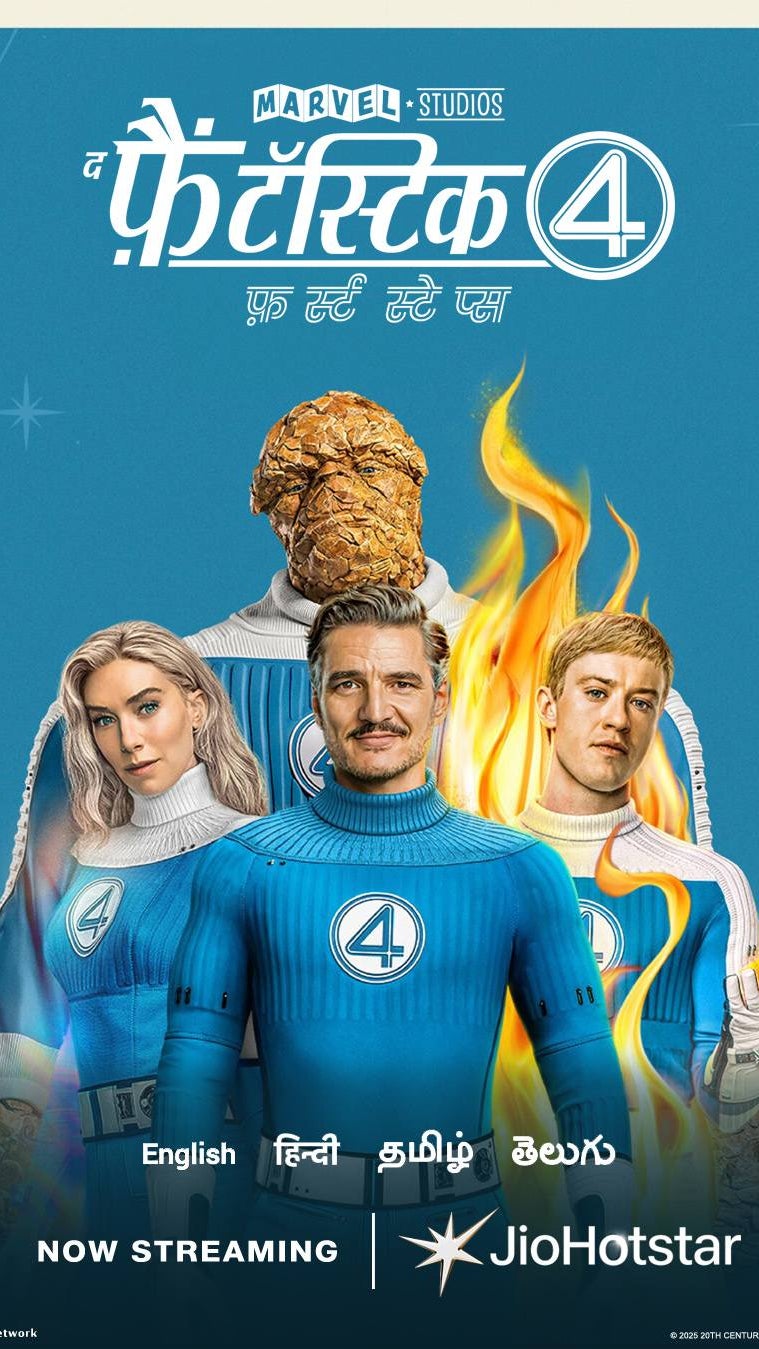
A poster of “The Fantastic Four” announces the Hindi release.
The rise of streaming platforms has sparked a growing appetite for content dubbed in local languages worldwide. AI is increasingly used to deliver content cheaply and quickly, and voice actors are beginning to push back, even though they don’t have strong unions, Rafael Grohmann, an assistant professor of media studies at the University of Toronto, told Rest of World.
“Particularly in the Global South, they don’t have the economic power, the discursive power, or the institutional support to stop production like the Hollywood unions did,” Grohmann said. “So they are forming collectives, and releasing manifestos, to intervene in how generative AI is used, managed, challenged and refused in their workplace.”
A loss of “cultural sovereignty”
Grohmann built a tracker to map such unions, listing more than 100 movements by creative workers in about 25 countries including Turkey, Argentina, Chile, India, and South Korea. Voice actors, who lack the visibility of actors, are among the hardest hit, and the impact goes beyond job loss to the issue of “cultural sovereignty,” he said.
“In countries like Brazil or Mexico, the oral culture is very strong, and you really need a human to translate for the local context,” he said. “So in Brazil, Peter becomes Pedro. The voice actors have a huge fandom, and they become more famous than the Hollywood actors in the film.”
International markets are critical for Hollywood, generating about two-thirds of revenue. Much of this comes from dubbing films and TV shows in local languages. Streaming platforms such as Netflix and Amazon Prime are also adding more language options for their content to increase their share of foreign markets.
Last year, Amazon Prime announced it would add “AI-aided dubbing on licensed movies and series that would not have been dubbed otherwise.” After viewers ridiculed some AI-generated English and Spanish dubs of anime titles, including the Banana Fish series and the movie No Game No Life: Zero, some of these were removed.
In a country like India, with more than a dozen official languages, commercials, documentaries, and audio books were a gold mine for voice actors. Not anymore.
“These jobs are being annihilated by AI,” Ganessh Divekar, general secretary of the Association of Voice Artists of India, told Rest of World. Recently, Divekar — the voice of Hollywood star Pedro Pascal in the Marvel franchise in Hindi, and Luigi in the Cars films dubbed in Hindi — noticed his voice had been mixed with the voice of another actor using AI, for a film. But there was nothing he could do.
“An entirely new category of high-value work”
Advances in voice cloning — which allows the texture of one voice actor to be used for the performance of another — mean that professionals like Divekar may no longer be required to dub in different languages, beyond providing the material for AI training.
“There is no way to prevent them from using my voice however they wish,” he said. “Earlier, when we were called in for a job, we would not ask what our voice would be used for. Now, we are telling members to ask what it will be used for, and ask for more money when signing perpetuity contracts, because the voice becomes their property in perpetuity and they can do anything with it, including train AI.”
Courts in India have recognized that a person’s voice is “an intrinsic part of their identity and falls within the right to privacy,” and that unauthorized commercial use can violate their personality rights, said Anamika Jha, a media and entertainment lawyer, and the founder of law firm Attorney for Creators. But these provisions do not fully extend to the use of voice data in training AI systems, she told Rest of World.
Earlier, I was a voice; now, I have to say I’m a human voice to distinguish myself from AI.”Ganessh Divekar, voice actor and general secretary of the Association of Voice Artists of India
“A voice can be cloned and reused indefinitely without further consent or payment,” Jha said. There are also serious reputational concerns. “A cloned voice may be used in contexts that the artist would never endorse, including political messaging, controversial advertising, or explicit content … [and in] impersonation and fraud.”
With appropriate protections and licensing agreements, there can be a big opportunity, too. Voices, a voice solutions company with over 100,000 registered voice actors who can speak in more than 100 languages, now offers voice data and voice AI to enterprise clients. Voice AI jobs pay up to 85 times as much as traditional voice-over work, Julianna Jones, the company’s director of talent success, told Rest of World.
All the voice data on the platform is “intentionally captured” from consenting actors or contributors, and every voice AI agreement includes consent to voice cloning, licensing, and legal protections that ensure their rights and compensation are preserved “even in regions without regulations,” Jones said.
“This opens up an entirely new category of high-value work,” she said. “Actors retain a say in how their voice is used, stay actively involved as the voice evolves, and continue earning as the technology improves.”
For voice actors such as Divekar, however, the fight to retain control over their voice and earn a living continues.
“Earlier, I was a voice; now, I have to say I’m a human voice to distinguish myself from AI,” he said.