



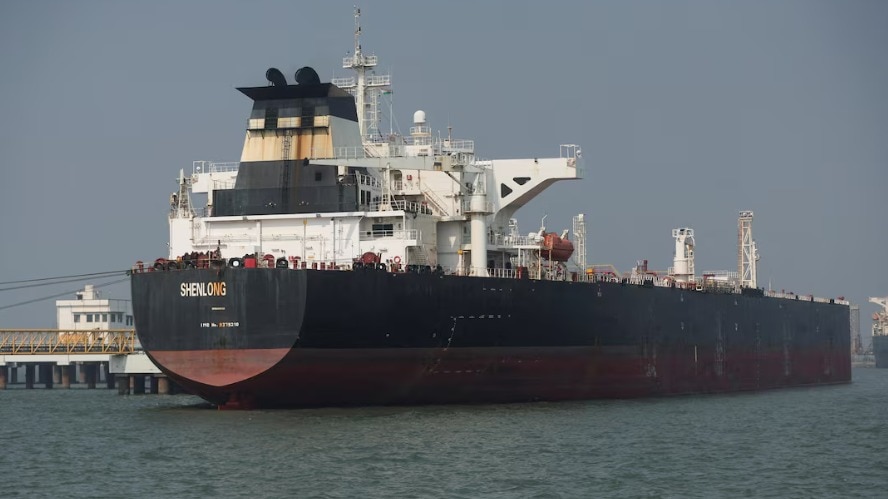
India’s petroleum ministry denies reports that an Iranian crude oil tanker was redirected to China, citing trade optimisation as the reason.
India’s Ministry of Petroleum has publicly dismissed claims that an Iranian crude oil tanker was diverted to China due to payment complications. In a statement shared on social media platform X, the ministry labelled these reports as ‘factually incorrect’. The assertion came after a tanker, initially headed to India’s Vadinar terminal in Gujarat, changed its course towards Dongying in China. The ministry explained that while shipping documents specify a destination, cargo vessels may alter their paths for reasons of ‘trade optimisation and operational flexibility’.
Further detailing India’s oil sourcing strategy, the ministry noted that the country imports crude oil from over 40 nations, with companies operating under the full discretion to procure oil based on commercial needs. In their statement, officials emphasised that India’s crude oil supplies are fully secured for the upcoming months.
The ministry also addressed concerns over liquefied petroleum gas (LPG) supplies, confirming that an LPG vessel named Sea Bird, which was transporting approximately 44,000 metric tonnes of Iranian LPG, successfully berthed at the port of Mangalore on Thursday and is currently in the process of discharging its cargo.
Despite ongoing tensions in the Middle East, particularly the conflict involving the US, Israel, and Iran which has impacted transit through the Strait of Hormuz, India has maintained steady maritime traffic. Reports indicate that at least eight vessels associated with Indian interests have navigated the critical Strait since the escalation of tensions in late February. Iran’s government recently reassured India regarding the safety of its maritime interests in Hormuz, with an official Indian social media message stating, ‘Our Indian friends are in safe hands, no worries.’
The vessels successfully navigating the Strait include carriers such as Green Sanvi, Shivalik, Nanda Devi, and Pine Gas, amongst others. As the geopolitical landscape continues to evolve, India’s refining capacity and access to diverse oil sources remain a focal point of its energy policy.